
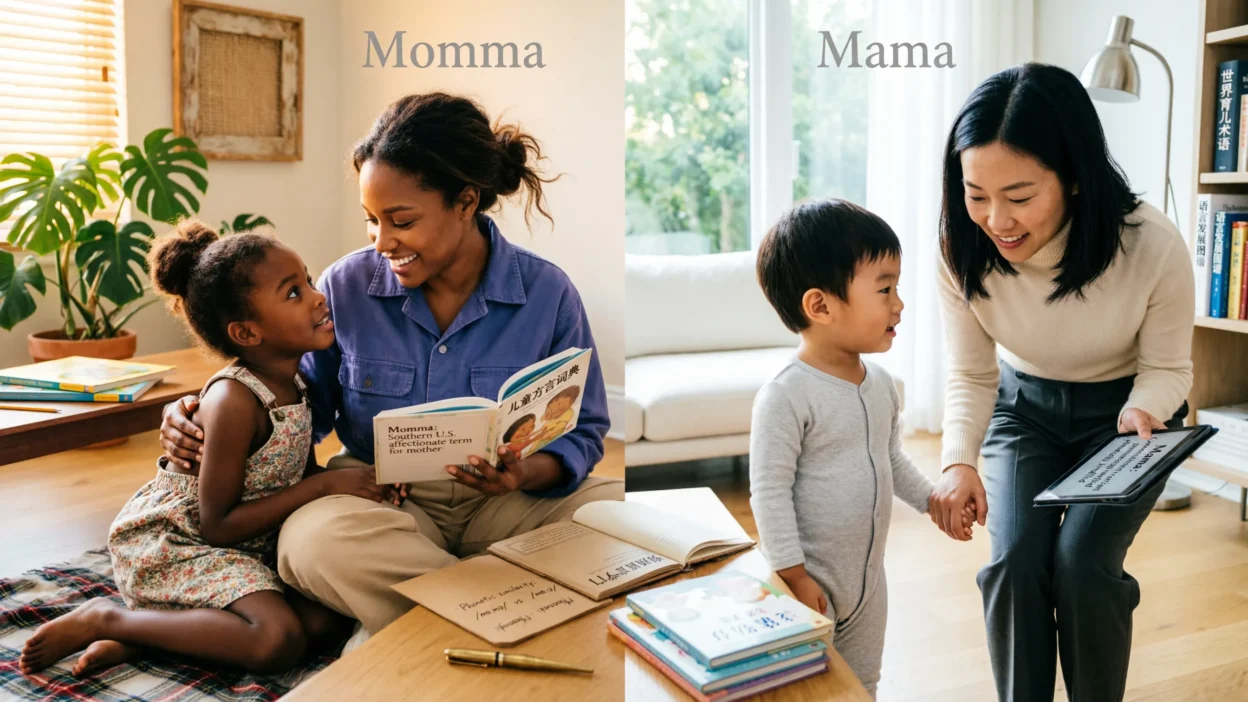
The debate over momma vs mama often confuses English learners, writers, and even native speakers. Since both words refer to a mother, many people assume they are interchangeable. However, their usage depends on regional preferences, tone, and context rather than strict grammar rules.
Understanding the subtle differences between momma and mama can help you choose the most natural word in conversations, creative writing, social media posts, and everyday communication. This guide explains when to use each term, provides practical examples, highlights common mistakes, and helps you remember the difference with an easy trick.
Quick Answer
Mama is the more common and widely accepted spelling used around the world, while momma is an informal variation that appears more often in American English, especially in Southern dialects. Both mean “mother,” but mama is generally considered more universal, whereas momma often conveys warmth, affection, or regional flavor.
Why People Confuse Momma and Mama
People confuse these words because they have the same meaning and nearly identical pronunciation in many accents.
Other reasons include:
- Both refer to a mother.
- Both are affectionate family terms.
- Movies, music, and books use both spellings.
- Regional dialects influence which spelling people prefer.
- Neither word changes the meaning of a sentence.
What Does “Momma” Mean?
Momma is an affectionate, informal spelling of mother. It is especially common in the United States, particularly in Southern American English and casual speech.
Characteristics of Momma
- Informal and affectionate
- Common in American English
- Frequently appears in stories, songs, and dialogue
- Adds warmth and personality
Examples
- My momma always made the best cookies.
- I called my momma after work.
- His momma taught him good manners.
- My momma never forgot a birthday.
- Everyone loved Jake’s momma.
What Does “Mama” Mean?
Mama is also an affectionate word for mother. It is the more widely recognized spelling and is common across many English-speaking countries and numerous other languages.
Characteristics of Mama
- Universal and familiar
- Used by children worldwide
- Suitable for informal writing
- Common in family conversations
Examples
- Mama, can you help me?
- My mama always supports me.
- She hugged her mama goodbye.
- Their mama smiled proudly.
- The baby reached for mama.
Momma vs Mama: Comparison Table
| Feature | Momma | Mama |
|---|---|---|
| Meaning | Mother | Mother |
| Formality | Informal | Informal |
| Regional Use | Mostly American English | Worldwide |
| Common in Southern US | Yes | Yes |
| Common Internationally | Less common | Very common |
| Used by Young Children | Sometimes | Very often |
| Emotional Tone | Warm, rustic, affectionate | Warm, universal, loving |
When to Use Each
Use Momma When:
- Writing American dialogue.
- Creating Southern-style characters.
- Showing warmth or family closeness.
- Quoting informal speech.
- Writing personal stories.
Use Mama When:
- Writing for an international audience.
- Referring to a mother generally.
- Using common everyday English.
- Talking about babies or young children.
- Keeping the wording universally familiar.
Examples of Momma vs Mama
Here are more examples showing both words in context.
Momma
- My momma taught me to be kind.
- Everyone respected his momma.
- Momma baked pies every Sunday.
- My momma encouraged my dreams.
- Her momma loved gardening.
- My momma always answered the phone.
- His momma welcomed every guest.
- My momma gave the best advice.
- Their momma worked hard every day.
- I miss my momma dearly.
Mama
- Mama, I’m home.
- My mama reads bedtime stories.
- She called her mama every weekend.
- Baby smiled at mama.
- Mama hugged her tightly.
- My mama loves gardening.
- Their mama cooked dinner.
- I thanked my mama for everything.
- Mama always believed in me.
- We surprised mama on Mother’s Day.
Common Mistakes
Many writers make these errors:
- Thinking one spelling is grammatically wrong.
- Assuming momma and mama have different meanings.
- Using momma in highly formal or academic writing.
- Mixing spellings without considering the audience.
- Believing one spelling is always American or always British.
Memory Trick
Here’s an easy way to remember:
- Mama = the more universal spelling.
- Momma = the spelling often seen in American family speech, especially Southern dialects.
If you’re writing for readers worldwide, mama is usually the safer choice.
American vs British English
There is no strict American-versus-British grammar rule for these words.
- American English frequently uses both momma and mama, depending on region.
- British English more commonly uses mum, mummy, or mumsy in everyday conversation.
- Mama may still appear in literature, songs, and family contexts across the UK.
Similar Words
These words also refer to a mother in different contexts.
- Mother
- Mom
- Mum
- Mummy
- Mommy
- Ma
- Mam
- Mater (informal)
- Parent
- Mommy Dearest (context-specific)
Final Verdict
Both momma and mama are correct spellings that express affection for a mother. The difference is not grammatical but stylistic and regional.
Choose mama if you want a widely understood, universal term. Choose momma if you want to reflect American culture, Southern speech, or add warmth and personality to your writing.
Frequently Asked Questions
Is momma grammatically correct?
Yes. Momma is a correct informal spelling commonly used in American English.
Is mama more common than momma?
Yes. Mama is generally more common worldwide and appears across many languages and cultures.
Which spelling should I use in formal writing?
In formal writing, it is usually better to use mother unless you are quoting someone or writing dialogue.
Do momma and mama have different meanings?
No. Both words mean mother and differ mainly in style and regional preference.
Is momma only used in the Southern United States?
No. Although it is especially popular there, people throughout the United States also use momma.
Do children say mama first?
Many babies naturally produce sounds similar to mama, making it one of the earliest words in many languages.
Can I use both spellings in the same story?
Yes, but only if it fits different characters or speaking styles. Otherwise, stay consistent.
Conclusion
Understanding momma vs mama is more about recognizing style than learning a grammar rule. Since both words mean the same thing, choosing the right one depends on your audience, tone, and the setting of your writing.
For most readers, mama is the safest and most universally recognized option. If you’re writing dialogue, memoirs, or stories with a distinctly American voice, momma can make your writing sound more authentic and emotionally engaging. Knowing the difference allows you to write naturally and confidently.