
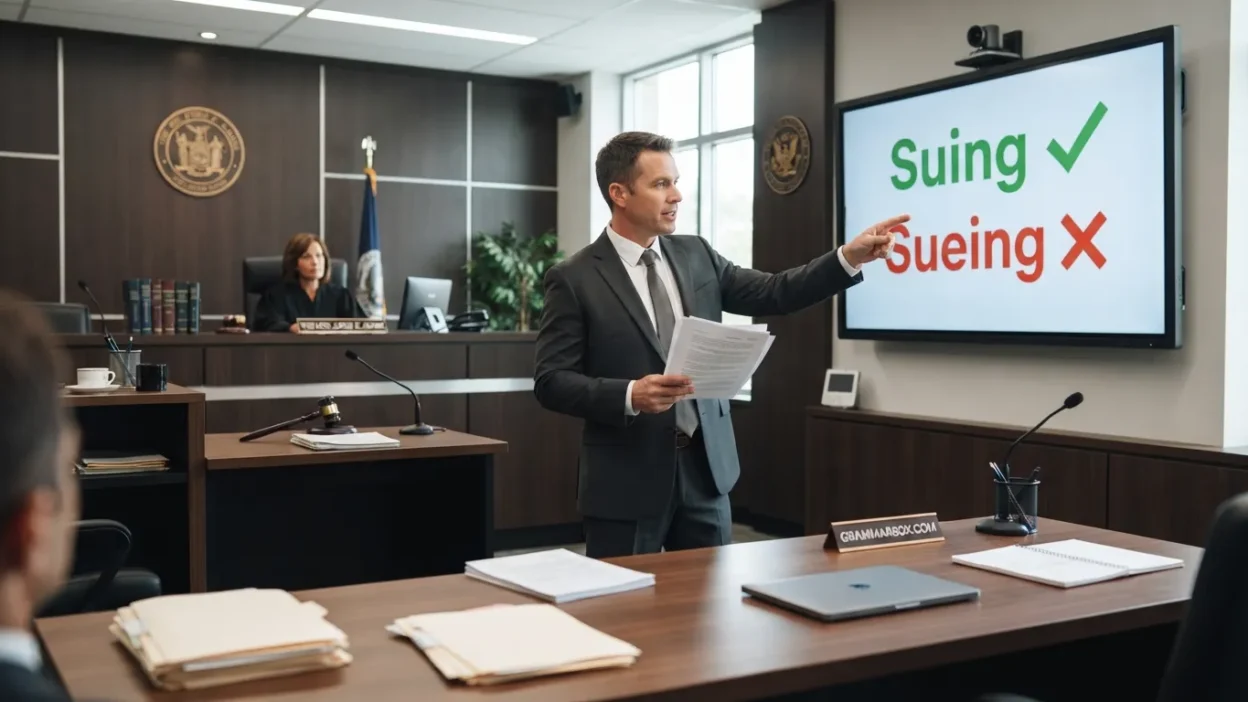
If you have ever wondered whether the correct spelling is suing or sueing, you are not alone. This spelling confusion happens because the verb sue ends in a silent e, and English spelling rules can make adding -ing seem tricky. At first glance, “sueing” may look like the natural form, but standard English follows a specific rule here.
The correct spelling is suing, not sueing. When sue takes the -ing ending, the final e is dropped, producing suing. The word can mean taking legal action against someone, but it can also refer to formally making a legal claim.
Understanding this small spelling rule will help you write accurately in emails, essays, legal discussions, and everyday communication. In this guide, we will compare suing vs. sueing, explain why the mistake occurs, and provide practical examples you can remember.
Quick Answer
Suing is the correct spelling. Sueing is incorrect in standard English. The word suing is formed by adding -ing to sue after dropping the final silent e. For example: “She is suing the company.”
Why People Confuse It
The confusion comes from the spelling of the base verb sue.
When people see sue, they may assume that adding -ing simply means attaching the suffix:
sue + ing = sueing
However, English spelling usually removes a final silent e before adding -ing:
- make → making
- take → taking
- write → writing
- sue → suing
There is one additional challenge: suing looks unusual because the letters u and i appear next to each other. This makes sueing feel visually familiar even though it is incorrect.
Suing: The Correct Word
Suing is the correct present participle and gerund form of sue.
The verb sue means to take legal action against a person, organization, or company, usually through a court.
Examples:
- The customer is suing the company.
- They are suing for damages.
- She threatened to start suing the manufacturer.
Why “Suing” Is Correct
The spelling follows the common rule of dropping the final silent e before adding -ing:
sue → suing
The pronunciation may seem unusual, but the spelling is standard.
Sueing: The Incorrect Spelling
Sueing is generally considered a misspelling of suing in modern standard English.
Although someone might write “sueing” because it appears to preserve the original word sue, it does not follow the standard spelling pattern used when forming the -ing form.
❌ The company is sueing the contractor.
✅ The company is suing the contractor.
If you are writing professionally, academically, or formally, always use suing.
Suing vs. Sueing: Comparison Table
| Feature | Suing | Sueing |
|---|---|---|
| Correct spelling | ✅ Yes | ❌ No |
| Base verb | Sue | Sue |
| Form | Sue + -ing | Incorrect formation |
| Meaning | Taking legal action | Intended to mean “suing” |
| Standard English | Yes | No |
| Example | He is suing the firm. | He is sueing the firm. ❌ |
When to Use Each
When to Use “Suing”
Use suing whenever you need the -ing form of the verb sue.
It can appear after forms of be:
- She is suing her former employer.
- They were suing the company.
- He has been suing the manufacturer.
It can also function as a gerund:
- Suing someone can be expensive.
- Suing the business was their last option.
When to Use “Sue”
Use sue when you need the base form of the verb.
- I may sue the company.
- They plan to sue for damages.
- She decided to sue her landlord.
When Not to Use “Sueing”
Avoid sueing in standard English writing.
Instead, write suing.
Examples of Suing
Here are some natural examples showing how suing works in different sentences:
- The customer is suing the company for damages.
- She is suing her former employer over the unpaid wages.
- The family considered suing the manufacturer.
- He is suing the restaurant after the accident.
- They are suing for compensation.
- The athlete is suing the organization for breach of contract.
- The homeowner threatened to start suing the contractor.
- Suing someone should usually be considered carefully.
- The business is suing its former partner.
- She spent months considering whether suing was the right choice.
- The company denied the allegations after learning that the customer was suing.
- He decided against suing because the dispute was settled.
Common Mistakes
Mistake 1: Writing “Sueing”
❌ He is sueing the company.
✅ He is suing the company.
Mistake 2: Thinking Every Letter Must Stay
It is easy to think that the e in sue must remain when adding -ing. However, the final silent e is dropped.
Mistake 3: Confusing Spelling With Pronunciation
The unusual appearance of suing can make writers doubt the spelling. Remember that pronunciation does not always tell you exactly how an English word should be spelled.
Mistake 4: Using “Sueing” in Formal Writing
Even if the meaning is clear, sueing is not the standard spelling. Use suing in school assignments, professional documents, websites, and formal correspondence.
Memory Trick
Use this simple trick:
Sue loses its final E before -ing.
Think:
SUE → SU + ING → SUING
You can also remember:
This makes the spelling easier to recall whenever you need the present participle of sue.
American vs. British English
There is no meaningful spelling difference between American and British English for this word.
Both varieties use:
suing ✅
and not:
sueing ❌
Whether you are writing for an American, British, Canadian, or Australian audience, suing is the standard spelling.
Similar Words
The spelling pattern in suing is related to other verbs that lose a final silent e before -ing.
| Base Verb | -ing Form |
|---|---|
| sue | suing |
| make | making |
| take | taking |
| write | writing |
| drive | driving |
| give | giving |
| use | using |
| move | moving |
However, English has exceptions and different spelling patterns, so it is helpful to check the individual verb when you are uncertain.
Related Legal Words
Because sue is a legal verb, you may also encounter:
- lawsuit — a legal case brought before a court
- plaintiff — the person or party bringing a civil case
- defendant — the person or party being sued
- litigation — the process of resolving a dispute through legal action
- claim — a demand for a legal remedy or compensation
- damages — money awarded to compensate for certain losses
Final Verdict
The answer is simple:
Suing ✅
Sueing ❌
Suing is the standard and correct -ing form of sue. The final silent e is removed before the -ing suffix is added.
Whenever you are unsure, remember the pattern sue → suing. Using the correct spelling will make your writing clearer and more professional.
FAQs:
Is “suing” the correct spelling?
Yes. Suing is the correct standard spelling of the -ing form of sue.
Is “sueing” ever correct?
No. Sueing is considered a misspelling in standard modern English. Use suing instead.
Why is it “suing” and not “sueing”?
The final silent e in sue is dropped before adding -ing, giving us suing.
What does “suing” mean?
Suing means taking legal action against someone, usually by bringing a civil case to court.
What is the past tense of “sue”?
The past tense is sued.
Example: “She sued the company for damages.”
What is the noun form of “sue”?
Common related nouns include lawsuit, suit, and litigation, depending on the context.
Is “suing” spelled the same in British and American English?
Yes. Both British and American English use suing.
Remember This
Sue + ing = suing ✅
Drop the final e before adding -ing.
Suing is correct.
Sueing is incorrect.
Conclusion
If you are choosing between suing or sueing, always choose suing. The correct spelling follows the standard English rule of removing the final silent e before adding -ing. Although suing may look unusual at first, it is the accepted spelling in both American and British English.
Once you remember the simple pattern sue → suing, this common spelling question becomes easy. If you are discussing a lawsuit, legal action, compensation, or a court case, suing is the form you should use in clear and professional writing.