
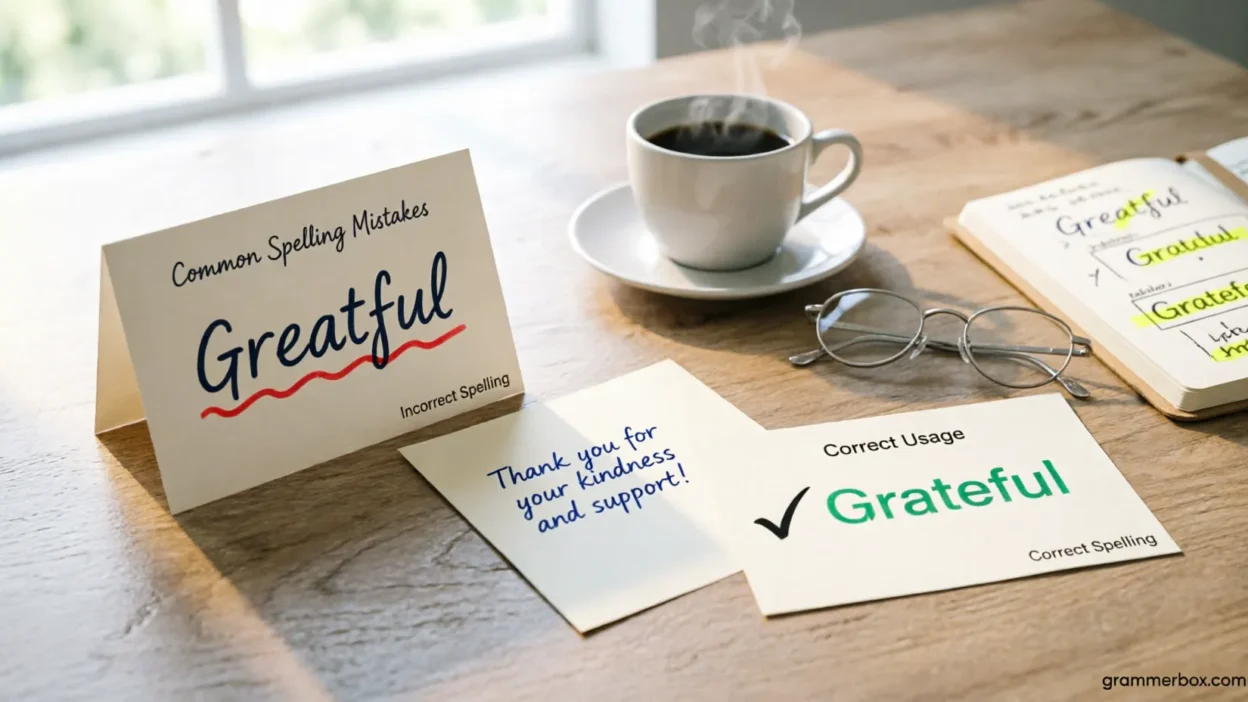
Many English learners and even native speakers accidentally write greatful instead of grateful. Since both words look similar, it’s easy to assume they are both acceptable spellings. However, only one of them is recognized as correct in standard English.
If you’ve ever wondered if you should write greatful or grateful, you’re in the right place. This guide explains the difference in simple language, shows why people confuse these spellings, provides practical examples, and shares memory tricks to help you remember the correct form every time.
Quick Answer
Grateful is the correct spelling and means feeling thankful or appreciative for something or someone. Greatful is a common misspelling and is not accepted in standard English. Whenever you want to express thankfulness, always use grateful in both formal and informal writing.
Why People Confuse Greatful vs Grateful
The confusion comes from pronunciation and word association.
Many people assume that because grateful sounds similar to the word great, it should be spelled greatful. In reality, the word grateful comes from the noun gratitude, not from great.
Since English spelling isn’t always phonetic, this mistake appears frequently in emails, social media posts, school assignments, and even professional writing.
What Does “Greatful” Mean?
Greatful is not a correct English word.
Although it appears often online, dictionaries and style guides recognize it only as a spelling mistake for grateful.
Incorrect Examples
- I am greatful for your support.
- She felt greatful after receiving the award.
- We are greatful for your kindness.
Each sentence should use grateful instead.
What Does “Grateful” Mean?
Grateful is an adjective that means feeling thankful, appreciative, or thankful for kindness, help, or good fortune.
Correct Examples
- I am grateful for your help.
- We are grateful to everyone who supported us.
- She felt grateful after receiving the scholarship.
- They were grateful for the opportunity.
- I’m truly grateful for your friendship.
Greatful vs Grateful: Comparison Table
| Feature | Greatful | Grateful |
|---|---|---|
| Correct spelling | ❌ No | ✅ Yes |
| Dictionary word | ❌ No | ✅ Yes |
| Meaning | None | Feeling thankful |
| Part of speech | Not applicable | Adjective |
| Suitable for formal writing | ❌ No | ✅ Yes |
| Suitable for academic writing | ❌ No | ✅ Yes |
| Common mistake | Yes | No |
When to Use Each
Use Grateful When:
Use grateful whenever you’re expressing appreciation or thankfulness.
Examples include:
- Thank-you messages
- Emails
- Speeches
- Essays
- Personal letters
- Social media captions
- Professional communication
Avoid “Greatful”
Never use greatful in formal or informal writing. Spell checkers may catch it, but it’s best to remember the correct spelling yourself.
Examples of Grateful in Sentences (10+)
Here are practical examples:
- I am grateful for your encouragement.
- She was grateful to her teachers.
- We’re grateful for every opportunity.
- He felt grateful after recovering from illness.
- Thank you—I am truly grateful.
- The family was grateful for the community’s support.
- They remained grateful despite the challenges.
- I’m grateful that you believed in me.
- We are grateful to all our customers.
- She wrote a grateful note after the event.
- I’m forever grateful for your kindness.
- Everyone felt grateful for the warm welcome.
Common Mistakes
Many writers make these errors:
- ❌ Greatful for your help.
- ✅ Grateful for your help.
- ❌ I feel very greatful today.
- ✅ I feel very grateful today.
- ❌ She is greatful to her parents.
- ✅ She is grateful to her parents.
- ❌ We are greatful for everything.
- ✅ We are grateful for everything.
Memory Trick
A simple way to remember the correct spelling is:
Grateful comes from gratitude—not from great.
Think of this connection:
Gratitude → Grateful
Whenever you think of being thankful, think of gratitude, and the spelling grateful becomes much easier to remember.
American vs British English
There is no difference between American and British English for this word.
Both varieties use:
- ✅ Grateful
- ❌ Greatful
Whether you’re writing in the United States, the United Kingdom, Canada, Australia, or elsewhere, grateful is always the correct spelling.
Similar Words
If you’re looking for related vocabulary, here are some useful alternatives:
- Thankful
- Appreciative
- Obliged
- Indebted
- Blessed
- Recognizant
- Content
- Relieved
- Pleased
- Respectful
Each has a slightly different meaning, but all can express appreciation in different contexts.
Final Verdict
The answer is simple:
- Grateful ✅ Correct
- Greatful ❌ Incorrect
If you want your writing to look professional and accurate, always choose grateful. The incorrect spelling is extremely common, but avoiding it instantly improves your English.
FAQs:
Is “greatful” a real word?
No. Greatful is a common misspelling of grateful and is not accepted in standard English.
Why do people spell grateful as greatful?
Because many people associate it with the word great instead of its true root, gratitude.
Is grateful an adjective?
Yes. Grateful is an adjective describing someone who feels thankful.
Can I use greatful in informal writing?
No. Even in casual writing, greatful is considered incorrect.
Which spelling should I use in school or business emails?
Always use grateful.
Does Grammarly correct greatful?
Yes. Most grammar and spell-check tools suggest changing greatful to grateful.
Is grateful used in British English?
Yes. Both British and American English use the spelling grateful.
Remember This
Whenever you’re expressing thanks, write grateful.
Whenever you’re tempted to write greatful, remember gratitude. That’s the easiest way to choose the correct spelling every time.
Conclusion
Learning the difference between greatful vs grateful is easier than it first appears. While both spellings may seem logical, only grateful is accepted in standard English. The incorrect form, greatful, is simply a spelling mistake that often results from connecting the word with great instead of gratitude.
The next time you write a thank-you note, email, or social media post, remember that grateful is always the correct choice. Keeping this simple rule in mind will improve your spelling, strengthen your writing, and help you communicate with greater confidence.