English contains many word pairs that look similar but have completely different meanings. Opposed and apposed are excellent examples. Because these words differ by only one letter and share a similar pronunciation, writers often confuse them, especially in formal or academic writing.
However, the distinction is important. Opposed is a common word used to describe disagreement, resistance, or contrast. Apposed, on the other hand, is a specialized term mainly used in grammar, medicine, and technical contexts to mean “placed next to” or “positioned side by side.” Understanding this difference will help you avoid mistakes and improve your writing accuracy.
Quick Answer
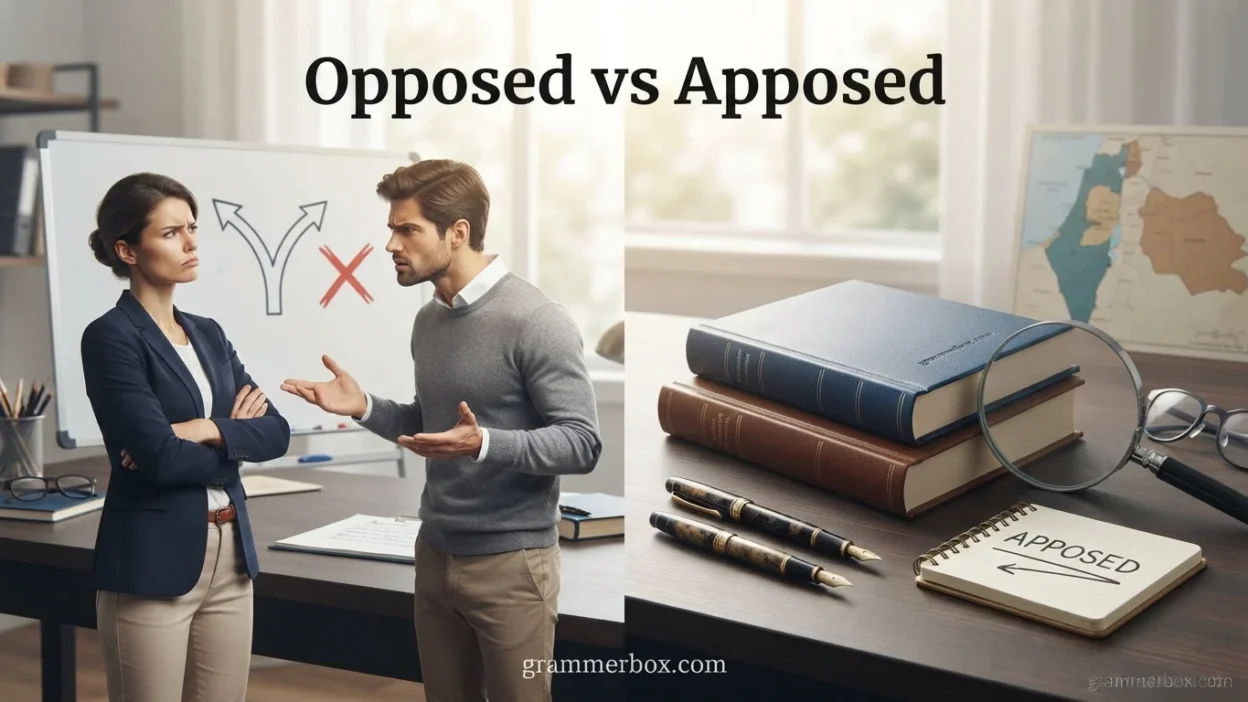
Opposed means against something, in disagreement, or in contrast.
Apposed means placed beside or adjacent to something, often in technical, grammatical, or medical contexts.
Example:
- She was opposed to the new policy. ✅
- The two tissues were apposed during surgery. ✅
Use opposed for disagreement and apposed for things positioned next to one another.
Why People Confuse Opposed and Apposed
People mix up these words because:
- They differ by only one letter.
- Their pronunciations are somewhat similar.
- Both can appear in formal writing.
- Many writers rarely encounter apposed, making them assume it is a misspelling of opposed.
The confusion becomes greater in academic, scientific, or grammatical discussions where both words may appear in the same document.
What Does “Opposed” Mean?
Opposed is the past form and adjective form of oppose, meaning:
- Against something
- In disagreement
- Contrasting
- Resistant
Examples of Opposed
- Many residents were opposed to the construction project.
- She is strongly opposed to smoking indoors.
- The committee remained opposed to the proposal.
- Their views are directly opposed.
Common Contexts
- Politics
- Debates
- Opinions
- Legal discussions
- Personal preferences
LSI Keywords: against, disagreement, resistance, contrary, objecting, conflicting views.
What Does “Apposed” Mean?
Apposed comes from the verb appose, which means:
- To place next to
- To position side by side
- To attach closely
This word is commonly used in:
- Grammar
- Medicine
- Anatomy
- Scientific writing
Examples of Apposed
- The surgeon carefully apposed the edges of the wound.
- The nouns are apposed in the sentence.
- Two structures were apposed during examination.
- The labels were apposed to the package.
Opposed vs Apposed: Comparison Table
| Feature | Opposed | Apposed |
|---|---|---|
| Meaning | Against, disagreeing | Placed next to |
| Part of Speech | Verb/Adjective | Verb/Adjective |
| Usage Frequency | Very common | Rare and technical |
| Common Fields | Everyday English, politics, opinions | Grammar, medicine, science |
| Example | I am opposed to the idea. | The tissues were apposed. |
When to Use Each Word
Use Opposed When:
- Expressing disagreement
- Showing resistance
- Describing contrasting opinions
Examples:
- They were opposed to the changes.
- He remained opposed throughout the discussion.
Use Apposed When:
- Talking about physical placement
- Discussing medical procedures
- Describing grammatical structures
Examples:
- The surgeon apposed the skin edges.
- The words were apposed in the sentence.
Examples of Opposed and Apposed (10+ Sentences)
Opposed Examples
- She was opposed to the decision.
- The workers were opposed to longer hours.
- I am not opposed to change.
- The two opinions were completely opposed.
- Environmental groups remained opposed.
Apposed Examples
- The tissues were carefully apposed.
- The labels were apposed to the documents.
- The grammatical elements were apposed.
- The doctor apposed the wound edges.
- Two structures appeared apposed.
- The nouns stood apposed in the sentence.
- The surfaces were closely apposed.
Common Mistakes
Incorrect:
❌ The citizens were apposed to the law.
Correct:
✅ The citizens were opposed to the law.
Incorrect:
❌ The surgeon opposed the wound edges.
Correct:
✅ The surgeon apposed the wound edges.
A good rule is to think about the meaning first: disagreement or placement?
Memory Trick
Remember:
- Opposed = Opposition = Against
- Apposed = Adjacent = Beside
The double P in apposed can remind you of two things placed side by side.
American vs British English
Both opposed and apposed have the same meanings in American and British English.
The only difference is frequency:
- Opposed is widely used in both varieties.
- Apposed remains uncommon and mostly appears in technical writing in both American and British English.
Similar Words
Words related to opposed:
- Against
- Resistant
- Contrary
- Objecting
- Disagreeing
Words related to apposed:
- Adjacent
- Joined
- Attached
- Positioned
- Aligned
FAQs:
Is apposed a real word?
Yes. Apposed is a correct English word, although it is mainly used in technical, grammatical, and medical contexts.
What does opposed mean?
Opposed means against, in disagreement, or resistant to something.
Can apposed mean against?
No. Apposed means placed beside, not opposed or against.
Is apposed used in medicine?
Yes. Doctors and surgeons often use apposed to describe tissues or wound edges positioned together.
Which word is more common?
Opposed is much more common in everyday English.
Are opposed and apposed pronounced the same?
No. They sound similar, but they are pronounced slightly differently.
Is apposition related to apposed?
Yes. In grammar, apposition refers to words or phrases placed side by side for explanation.
Conclusion
The difference between opposed and apposed is straightforward once you understand their meanings. Opposed relates to disagreement, conflict, or resistance, while apposed refers to things placed beside one another.
Because opposed appears much more frequently in everyday language, many people assume apposed is incorrect. In reality, both words are valid but belong to very different contexts. Learning this distinction will make your writing clearer, more accurate, and more professional.
Remember This
Opposed = Against
Apposed = Beside
If people disagree, they are opposed. If objects sit side by side, they are apposed.