
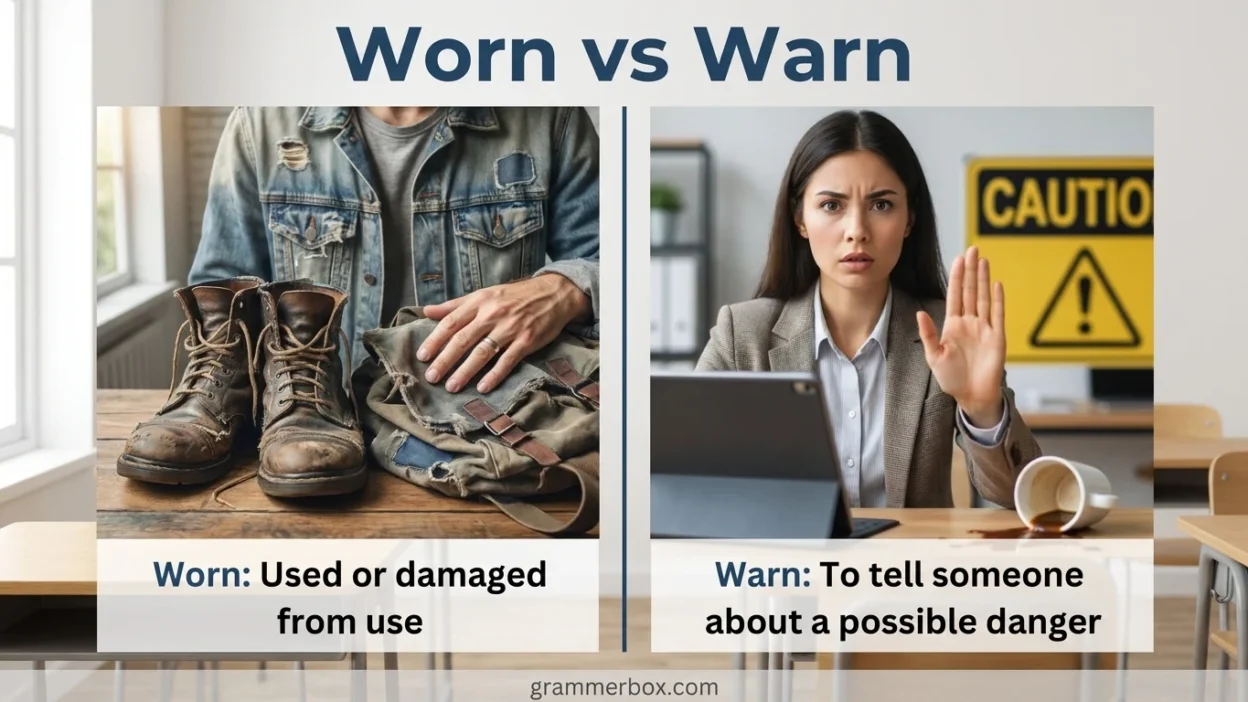
Worn vs warn may sound similar in some accents, but they have completely different meanings and uses. Worn is usually connected to wearing something or becoming damaged through use, while warn means to alert someone about possible danger or trouble. Mixing them up can change the meaning of a sentence entirely.
Understanding the difference between worn and warn is useful for students, English learners, writers, and anyone who wants to avoid common spelling and vocabulary mistakes. This guide explains their meanings, pronunciation, grammar, examples, common errors, and easy tricks for remembering which word to use.
Quick Answer
Worn is the past participle of wear and can describe something used, damaged, or put on the body. Warn is a verb meaning to alert someone about danger, risk, or a possible problem. For example: She had worn the dress before and They warned us about the storm.
Why People Confuse Worn and Warn
The confusion between worn vs warn often happens because the words have similar pronunciations in many English accents. However, they belong to different parts of speech and have unrelated meanings.
Another reason is that worn comes from the verb wear, while warn is an independent verb. Learning their meanings and common sentence patterns makes the difference much easier to remember.
Worn: Meaning and Usage
Worn is the past participle of the verb wear.
It can describe:
- Something someone has put on their body
- Something that has become old through use
- Something damaged or weakened over time
Examples of Worn
- She has worn that jacket many times.
- He had worn glasses since childhood.
- The shoes were badly worn.
- This carpet looks old and worn.
- The paint had become worn after years of use.
Worn commonly appears with helping verbs such as has, have, and had.
Warn: Meaning and Usage
Warn is a verb that means to tell someone about a possible danger, problem, or risk.
You can warn someone about something or warn someone not to do something.
Examples of Warn
- The teacher warned the students about the test.
- Police warned drivers about icy roads.
- I warned you not to touch the stove.
- They warned us about the dangerous trail.
- Please warn me before you leave.
The word warn changes form depending on the tense:
- Present: warn
- Past: warned
- Past participle: warned
- Present participle: warning
Worn vs Warn: Comparison Table
| Feature | Worn | Warn |
|---|---|---|
| Part of speech | Usually adjective or past participle | Verb |
| Main meaning | Used, damaged, or previously worn | Alert someone about danger or risk |
| Base verb | Wear | Warn |
| Example | The shoes are worn. | I warn you to be careful. |
| Common forms | Wear, wore, worn | Warn, warned, warning |
When to Use Worn
Use worn when talking about clothing, appearance, or something that has become damaged through regular use.
Use worn when:
- Something has been put on the body
- Something is old from frequent use
- You are using the perfect tense of wear
Correct Examples
- She has worn this necklace before.
- His jeans were worn at the knees.
- The furniture looked worn and faded.
- I had worn a suit to the interview.
- The path was worn by years of walking.
When to Use Warn
Use warn when someone alerts another person about danger, consequences, or possible problems.
Use warn when:
- Giving a warning
- Alerting someone to danger
- Advising someone about possible consequences
Correct Examples
- I warn you to be careful.
- She warned me about the dog.
- They warned everyone to stay inside.
- The sign warns visitors about falling rocks.
- We were warned about the strong winds.
Worn vs Warn: Examples in Sentences
Here are more examples to clearly show the difference between worn and warn:
- She has worn that dress to several parties.
- The old boots were completely worn out.
- I warn you not to make the same mistake.
- The guide warned us about the slippery rocks.
- His favorite shirt looked worn after many years.
- Parents often warn children about strangers.
- The tires were badly worn and needed replacing.
- The doctor warned him about the risks.
- She had worn a red coat that day.
- Please warn me if the plans change.
- The fabric had become thin and worn.
- Officials warned residents about flooding.
- He has worn glasses since he was young.
- I want to warn you about a possible problem.
Common Mistakes
Using “Warn” Instead of “Worn”
❌ She has warn that dress before.
✅ She has worn that dress before.
Use worn as the past participle of wear.
Using “Worn” Instead of “Warn”
❌ I worn him about the danger.
✅ I warned him about the danger.
Use warned when referring to a warning in the past.
Confusing “Wore” and “Worn”
❌ She has wore the dress before.
✅ She has worn the dress before.
Remember:
- Wore = simple past
- Worn = past participle
For example:
- She wore a blue dress yesterday.
- She has worn a blue dress before.
Memory Trick for Worn vs Warn
A simple way to remember the difference is to connect worn with wear.
Wear → Wore → Worn
If your sentence is about clothing or something becoming old through use, worn is probably the correct word.
Connect warn with warning.
Warn → Warning
If you are alerting someone about danger or a possible problem, use warn.
Worn vs Warn in American and British English
Both worn and warn are used in the same way in American and British English. Their meanings and spellings remain the same.
However, pronunciation can vary slightly depending on the speaker’s accent. In some accents, the two words may sound very similar, which can make them easier to confuse when listening.
The grammar rules are also the same:
- Worn relates to wear
- Warn means to alert someone
Similar Words
Several words are related to worn and warn, but they should not be treated as synonyms.
Words Related to Worn
- Used
- Old
- Faded
- Damaged
- Frayed
- Weathered
- Threadbare
- Wore
- Wear
Words Related to Warn
- Alert
- Caution
- Advise
- Notify
- Inform
- Forewarn
- Remind
The best alternative depends on the context and meaning of the sentence.
Final Verdict: Worn or Warn?
The difference between worn vs warn is simple once you understand their meanings.
Use worn when talking about something that has been worn, used, or damaged over time. Use warn when you want to alert someone about danger, risk, or a possible problem.
Although the words may sound similar, they have completely different grammatical roles and meanings. Checking whether your sentence is about wearing something or giving a warning will usually help you choose the correct word.
FAQs:
Is it worn or warn?
It depends on the meaning. Use worn for the past participle of wear or something damaged through use. Use warn to alert someone about danger or a possible problem.
What is the difference between worn and warn?
Worn relates to wearing something or becoming old through use. Warn means to alert or caution someone.
Is “worn” the past tense of wear?
No. Wore is the simple past tense of wear, while worn is the past participle.
For example:
- Yesterday, I wore a coat.
- I have worn that coat before.
How do you use warn in a sentence?
You can use warn when alerting someone about danger or a possible problem.
Example: I warn you to be careful.
Is “warned” the past tense of warn?
Yes. The simple past and past participle of warn are both warned.
Can worn describe old things?
Yes. Worn can describe something that has become old, damaged, or weak because of frequent use.
Example: The sofa looked worn after many years.
Do worn and warn mean the same thing?
No. They have completely different meanings. Worn relates to wearing or use, while warn relates to giving a warning.
Conclusion
Understanding worn vs warn can help you avoid a common English vocabulary mistake. Worn comes from wear and is often used for clothing, objects, and things that have become old through use. Warn, on the other hand, means to alert someone about danger or a possible problem.
The easiest way to choose the correct word is to focus on the meaning of your sentence. If it involves wearing or using something, choose worn. If it involves alerting or cautioning someone, choose warn.
Remember This
Worn = related to wear or something used over time.
Warn = related to warning someone about danger or risk.