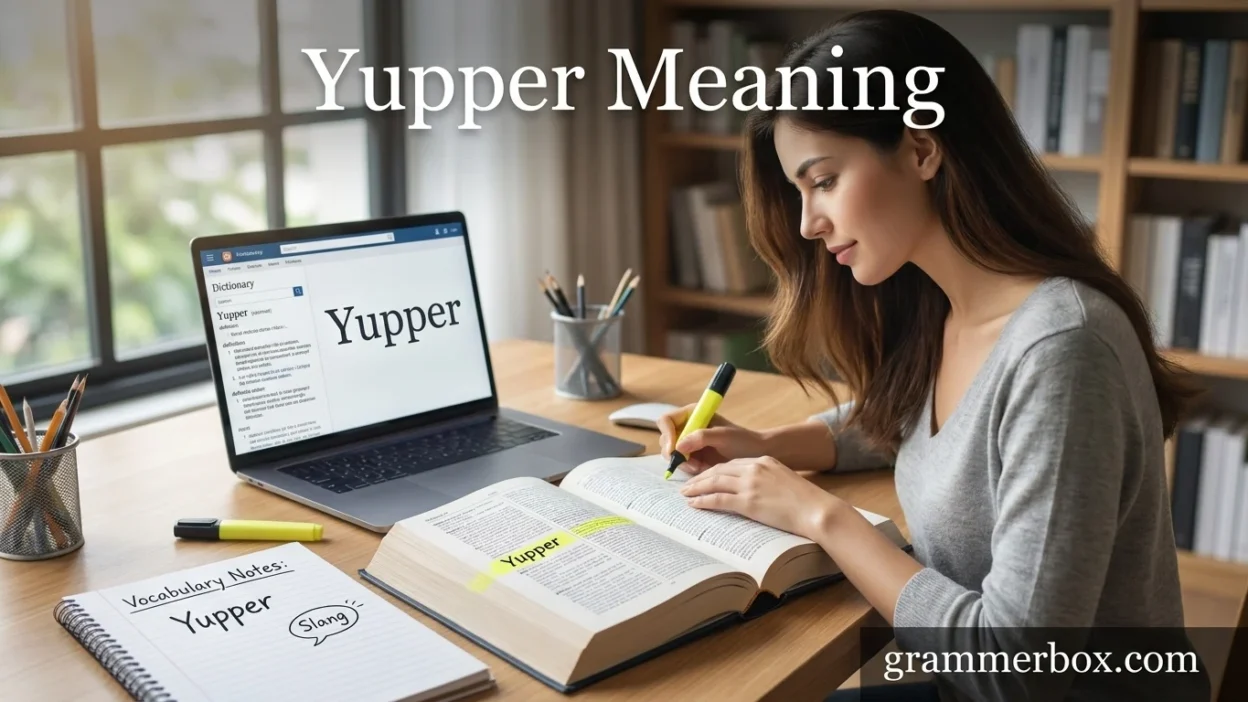
Have you ever received a message saying “Yupper!” and wondered what it meant? This playful expression is commonly used in casual conversations, text messages, and online chats. Although it is not a formal English word, yupper is generally understood as an enthusiastic or humorous way of saying “yes” or “yep.”
Understanding informal expressions like yupper can help you follow everyday conversations more naturally. Slang and casual language often develop through playful variations of common words, and yupper is a good example. In this guide, you’ll learn the yupper meaning, how people use it, whether it is appropriate in formal situations, and how it compares with similar expressions such as yep, yeah, and yup.
Quick Answer
Yupper is an informal and playful way of saying “yes,” “yep,” or “yup.” People usually use it in casual conversations to sound friendly, enthusiastic, or humorous. It is not generally suitable for formal writing, professional communication, or academic contexts.
Why Do People Confuse “Yupper”?
People may feel confused about yupper because it does not appear as a standard formal word in traditional English usage. It is mainly an informal expression created from words like yup and yep.
Another reason for confusion is that the meaning can slightly depend on tone. Someone saying “Yupper!” may simply mean yes, while another person may use it to sound cheerful, playful, or exaggerated.
Yupper Meaning
Yupper means yes.
It is a casual and expressive alternative to words such as:
- Yes
- Yeah
- Yep
- Yup
- Yea
The word often adds a playful or enthusiastic tone to a conversation.
Example:
“Are you coming to the party tonight?”
“Yupper!”
In this example, yupper simply means yes, I am.
The First Word: “Yup”
The word yup is a common informal version of yes. It is frequently used in spoken English, text messages, and casual online conversations.
Examples:
- “Did you finish the project?”
“Yup.” - “Is this your car?”
“Yup, it is.”
Yup sounds casual and relaxed, making it unsuitable for highly formal situations.
The Second Word: “Yupper”
Yupper is a more playful variation of yup. The added ending makes the response sound more expressive, humorous, or enthusiastic.
Unlike standard yes, yupper is strongly associated with informal communication.
Examples:
- “Are you ready?”
“Yupper!” - “Did you enjoy the movie?”
“Yupper, it was great!” - “Are we meeting tomorrow?”
“Yupper!”
Yupper vs Yes: Comparison Table
| Feature | Yupper | Yes |
|---|---|---|
| Meaning | An informal way of saying yes | An affirmative response |
| Tone | Playful and casual | Neutral or formal |
| Common Use | Texts and casual speech | All types of communication |
| Formal Writing | Not recommended | Appropriate |
| Professional Use | Usually avoided | Appropriate |
| Expressiveness | High | Depends on context |
When to Use “Yupper”
Use yupper when the situation is casual and relaxed.
Good situations include:
- Talking with friends
- Text messaging
- Casual social media conversations
- Informal family chats
- Playful conversations
- Friendly online discussions
Examples:
- “Do you want pizza?”
“Yupper!” - “Are you free this weekend?”
“Yupper, I am!” - “Did you see that video?”
“Yupper, it was hilarious!”
When Not to Use “Yupper”
Avoid using yupper in situations that require professional or formal English.
For example, do not usually write:
“Yupper, I have received your email.”
Instead, write:
“Yes, I have received your email.”
Other situations where yes is better include:
- Job applications
- Business emails
- Academic writing
- Formal presentations
- Legal documents
- Professional reports
Examples of “Yupper” in Sentences
Here are several examples to help you understand how yupper is used naturally.
- “Are you coming with us?” — “Yupper!”
- “Did you finish your homework?” — “Yupper, finally!”
- “Do you like chocolate?” — “Yupper, I love it!”
- “Are we still meeting at six?” — “Yupper!”
- “Did you watch the game?” — “Yupper, what an exciting match!”
- “Can you help me tomorrow?” — “Yupper, no problem.”
- “Are you ready to leave?” — “Yupper, let’s go!”
- “Did she call you?” — “Yupper, she called earlier.”
- “Do you understand the instructions?” — “Yupper!”
- “Are they joining us for dinner?” — “Yupper, they said they would.”
- “Did you buy the tickets?” — “Yupper, I bought them this morning.”
- “Do you want to try again?” — “Yupper, absolutely!”
Common Mistakes With “Yupper”
1. Using It in Formal Writing
Incorrect:
“Yupper, I agree with the terms and conditions.”
Better:
“Yes, I agree with the terms and conditions.”
2. Assuming It Has a Different Meaning From “Yes”
In most conversations, yupper simply means yes. The difference is mainly in tone and style.
3. Using It in Serious Professional Situations
While yupper can sound fun among friends, it may appear unprofessional in business communication.
4. Overusing Informal Expressions
Using too much slang can make your writing sound unclear or overly casual. Choose words that match your audience and situation.
Memory Trick for “Yupper”
Remember this simple connection:
Yup + playful ending = Yupper
Since yup means yes, you can easily remember that yupper also means yes, but with a more playful and enthusiastic tone.
Think:
Yupper = Yep, but more expressive!
American vs British English
Yupper is not a standard formal expression in either American or British English. However, informal variations of yes are common in everyday speech across English-speaking countries.
In American English, people commonly use:
- Yeah
- Yep
- Yup
In British English, people may also use:
- Yeah
- Yep
- Yup
The exact slang expression a person chooses can depend more on personality, region, age, and social group than on formal grammar rules.
Similar Words to “Yupper”
Several words have a similar meaning to yupper.
Yes
The standard and most widely accepted affirmative response.
Example:
“Yes, I understand.”
Yeah
A casual alternative to yes.
Example:
“Yeah, I know what you mean.”
Yep
A short and informal version of yes.
Example:
“Yep, that’s correct.”
Yup
Another casual alternative to yes.
Example:
“Yup, I’m ready.”
Yea
A word meaning yes, although its usage is different and often more formal or specialized.
Example:
“The members voted yea.”
Yupper Meaning in Text Messages
In text messages, yupper usually communicates more than a simple yes. It can make a response sound:
- Friendly
- Cheerful
- Playful
- Enthusiastic
- Humorous
For example:
Person 1: “Are you excited about the trip?”
Person 2: “Yupper!”
The response sounds more energetic than simply writing “Yes.”
Is “Yupper” a Real Word?
Yupper is an informal expression rather than a standard formal English word. People can understand it because it is clearly connected to informal affirmative words such as yup and yep.
Language constantly develops through everyday conversation, online communication, and popular culture. Informal words and expressions may become widely recognized even when they are not appropriate for formal writing.
Final Verdict: What Does “Yupper” Mean?
Yupper means “yes.” It is a casual, playful, and expressive variation of words like yup and yep.
Use yupper when speaking casually with friends, family, or people you know well. For formal situations, professional emails, and academic writing, choose yes instead.
The key difference is not the meaning but the tone:
- Yes = standard and versatile
- Yup = casual
- Yep = casual
- Yupper = casual, playful, and expressive
FAQs:
What does yupper mean?
Yupper means yes. It is an informal and playful way of saying yup, yep, or yeah.
Is yupper a proper English word?
Yupper is mainly an informal expression rather than a standard word used in formal English writing.
Can I use yupper in a professional email?
Generally, no. Use yes in professional emails and formal communication.
Is yupper the same as yup?
Yes, both generally mean yes. However, yupper sounds more playful and expressive.
Is yupper slang?
Yes, yupper can be considered an informal slang or conversational expression.
What is the difference between yupper and yeah?
Both can mean yes, but yupper usually sounds more playful, while yeah is a more common casual response.
Can yupper be used in text messages?
Yes. Yupper is commonly suitable for casual text messages and friendly online conversations.
Conclusion
The yupper meaning is simple: it is an informal and playful way of saying yes. Like yup, yep, and yeah, it belongs mainly in casual conversations where a relaxed and friendly tone is appropriate.
Although language allows plenty of creativity, context always matters. Use yupper when chatting with friends or sending casual messages, but choose yes when communicating in professional, academic, or formal situations. Knowing the difference helps you sound natural while still choosing the right word for every situation.
Remember This
Yupper = an enthusiastic, playful way of saying “yes.” Use it casually, but choose “yes” for formal and professional communication.