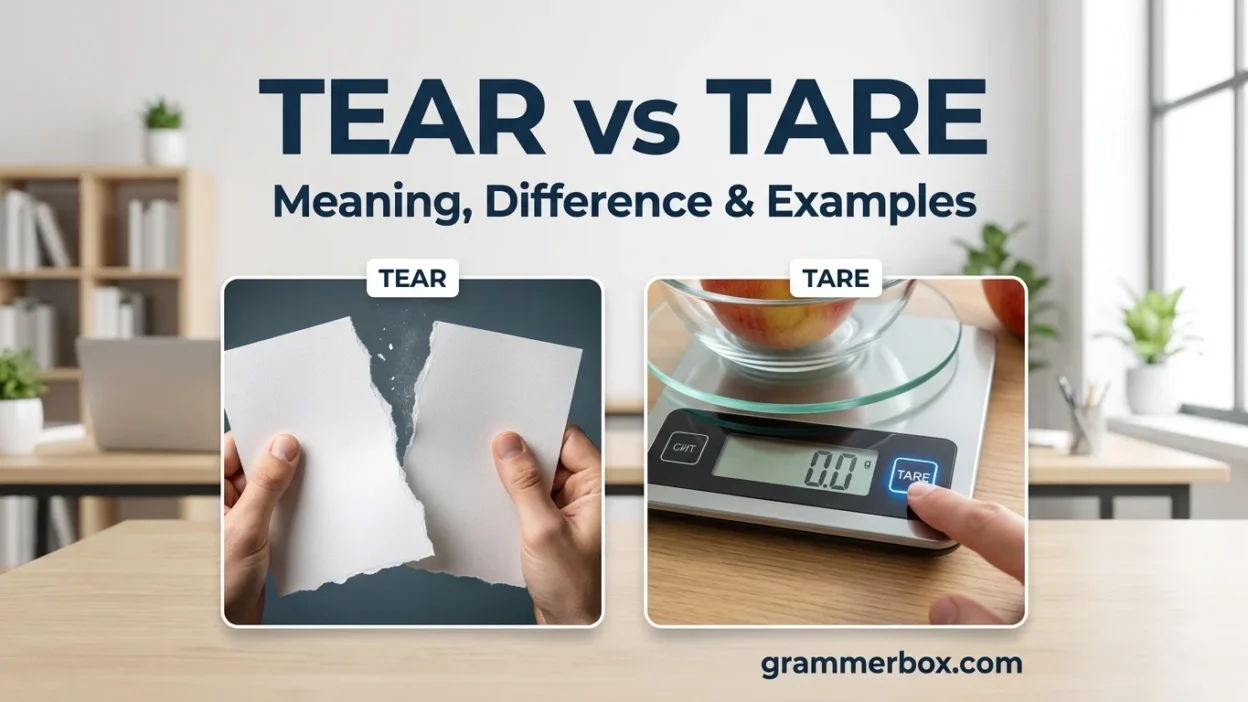
The words tear and tare may look somewhat similar, but they have completely different meanings and uses. Tear is a common English word that can refer to ripping something, a drop from the eye, or a split in material. Tare, on the other hand, is a more specialized word often used when weighing goods or containers.
One reason these words can confuse English learners is that tear has more than one pronunciation and meaning. Depending on the context, it can sound like teer or tair. Understanding the meaning and pronunciation of each word will help you avoid mistakes in writing and conversation.
Quick Answer
Tear usually means to rip something or refers to a drop of liquid from the eye. Tare refers to the weight of a container or packaging that is deducted from the total weight. Although the words can sound similar in some contexts, their meanings and uses are very different.
Why Do People Confuse Tear and Tare?
People confuse tear and tare mainly because of pronunciation and spelling.
The word tear can have two pronunciations:
- Tear /tɪr/ — a drop from the eye
- Tear /ter/ — to rip or pull apart
The word tare is pronounced /ter/, making it sound exactly like the verb tear when tear means “to rip.”
However, the meanings are unrelated. Context is the easiest way to determine which word is correct.
Tear: Meaning and Usage
The word tear has several meanings in English.
1. Tear as a Verb: To Rip
As a verb, tear means to pull something apart or make a hole in it.
Examples:
- Be careful not to tear the paper.
- The child tore his shirt.
- She accidentally tore the envelope.
- Don’t tear the fabric.
- The strong wind tore the flag.
The past tense of tear is tore, and the past participle is torn.
Verb forms:
- Present: tear
- Past: tore
- Past participle: torn
2. Tear as a Noun: A Drop From the Eye
A tear can also mean a drop of liquid that comes from the eye when someone cries or experiences strong emotions.
In this meaning, tear is pronounced like teer.
Examples:
- A tear rolled down her cheek.
- He wiped away his tears.
- The movie brought a tear to her eye.
- She had tears of happiness.
- I could see a tear in his eye.
3. Tear as a Noun: A Rip or Hole
A tear can also describe a rip or damaged area in fabric, paper, or another material.
Examples:
- There is a tear in my jacket.
- The book has a small tear on the cover.
- She noticed a tear in the curtain.
Tare: Meaning and Usage
Tare is a noun that usually refers to the weight of a container, package, or wrapping.
When goods are weighed, the container itself may add extra weight. The tare weight is subtracted to determine the actual weight of the product.
Example:
Suppose a box weighs 2 kilograms and the items inside weigh 8 kilograms.
- Total weight: 10 kilograms
- Tare weight: 2 kilograms
- Net weight: 8 kilograms
This is why tare is commonly used in:
- Shipping
- Manufacturing
- Food packaging
- Warehouses
- Scales and weighing systems
Examples of Tare
- The scale automatically subtracts the tare.
- Enter the container’s tare weight.
- The package weight includes the tare.
- Please remove the tare before calculating the net weight.
- The digital scale has a tare button.
Tear vs Tare: Comparison Table
| Feature | Tear | Tare |
|---|---|---|
| Main meaning | To rip; a drop from the eye; a rip | Weight of a container or packaging |
| Word type | Noun or verb | Usually a noun |
| Pronunciation | /tɪr/ or /ter/ | /ter/ |
| Common usage | Everyday English | Weighing and measurement |
| Example | Don’t tear the paper. | Press tare on the scale. |
When to Use Tear
Use tear when you are talking about:
- Ripping or damaging something
- A drop from the eye
- A hole or rip in material
- Strong emotional crying
Correct Examples
- Don’t tear the document.
- She began to tear the paper.
- A tear fell from his eye.
- There is a tear in the dress.
- The dog tore the cushion.
Remember that the meaning determines the pronunciation.
When to Use Tare
Use tare when talking about the weight of a container or packaging.
It is especially common with:
- Digital scales
- Food weighing
- Shipping containers
- Industrial measurement
- Product packaging
Correct Examples
- Press the tare button before adding the ingredients.
- The container has a tare weight of 500 grams.
- The scale removes the tare automatically.
- We need to calculate the net weight without the tare.
- The package was weighed after subtracting the tare.
Tear vs Tare: Examples in Sentences
Here are more examples to help you understand the difference.
Examples With Tear
- Please don’t tear the page.
- The child tore the wrapping paper.
- A tear rolled down her face.
- He tried not to tear the photograph.
- There was a small tear in the bag.
- The wind tore the sign from the wall.
- She wiped a tear from her eye.
- Be careful because the paper can tear easily.
- His jeans had a tear near the knee.
- The dog tore the toy apart.
- I saw a tear in the curtain.
- The emotional speech brought tears to everyone’s eyes.
Examples With Tare
- Press the tare button on the scale.
- The tare weight must be removed from the total.
- The machine calculates the tare automatically.
- The container’s tare was listed on the label.
- We weighed the box after subtracting the tare.
- The scale allows users to reset the tare.
- Add the bowl first and then press tare.
- The product’s net weight does not include the tare.
- The warehouse recorded the tare weight.
- Check the container’s tare before shipping the goods.
Common Mistakes With Tear and Tare
Mistake 1: Using Tare for a Rip
❌ There is a tare in my shirt.
✅ There is a tear in my shirt.
A rip or damaged area is always a tear.
Mistake 2: Using Tear for Container Weight
❌ Press the tear button on the scale.
✅ Press the tare button on the scale.
Scales use tare, not tear, when removing the weight of a container.
Mistake 3: Forgetting That Tear Has Two Pronunciations
The word tear changes pronunciation depending on its meaning.
- Tear from the eye = teer
- Tear meaning rip = tair
This difference is important in spoken English.
Mistake 4: Confusing Tear With Its Past Tense
The past tense of tear is tore, not teared in standard usage when referring to ripping something.
❌ She teared the paper.
✅ She tore the paper.
However, teared up can be used informally to mean becoming emotional or getting tears in your eyes.
Easy Memory Trick for Tear vs Tare
A simple way to remember the difference is to connect each word with a familiar idea.
Tear = Eyes or Rip
Think of:
- Tears in your eyes
- Tearing paper
Both meanings use tear.
Tare = Scale
Think of the T in tare as standing for total weight adjustment or the container weight removed from a scale.
If you’re talking about weighing a container, choose tare.
Tear vs Tare Pronunciation
Pronunciation is one of the most interesting differences between these words.
Tear Meaning Eye Drop
Tear = /tɪr/
It rhymes with words like:
- Fear
- Near
- Clear
Example: A tear fell from her eye.
Tear Meaning Rip
Tear = /ter/
It sounds like:
- Care
- Bear
- Pair
Example: Don’t tear the paper.
Tare
Tare = /ter/
It sounds the same as tear when tear means “to rip.”
Example: Press tare on the scale.
American vs British English
The meanings of tear and tare are generally the same in both American and British English.
In both varieties:
- Tear can mean to rip something.
- Tear can mean a drop from the eye.
- Tare refers to the weight of a container that is deducted from the total weight.
The pronunciation of tear may vary slightly depending on accent, but the basic pronunciation distinction between the two meanings remains the same.
British and American English speakers may also use different terms in specific industries or everyday situations, but tare weight is widely understood in both varieties.
Similar Words to Tear and Tare
Understanding related words can make the difference easier to remember.
Similar Words to Tear
Depending on the meaning, similar words include:
- Rip
- Split
- Shred
- Rake
- Pull apart
- Damage
For the eye-related meaning:
- Teardrop
- Weep
- Cry
- Sob
Related Words to Tare
Words commonly connected with tare include:
- Gross weight
- Net weight
- Container weight
- Scale
- Measurement
- Weighing
FAQs:
1. What is the difference between tear and tare?
Tear can mean to rip something or refer to a drop from the eye. Tare means the weight of a container or packaging that is deducted from the total weight.
2. Is tare pronounced the same as tear?
Yes, tare is pronounced the same as tear when tear means “to rip.” Both are pronounced approximately as /ter/.
3. What does tear mean in a sentence?
Tear can mean to rip something, such as Don’t tear the paper. It can also mean a drop from the eye, such as A tear rolled down her cheek.
4. What does tare mean on a scale?
On a scale, tare means removing or subtracting the weight of the container so that only the contents are measured.
5. Is it tear weight or tare weight?
The correct term is tare weight. It refers to the weight of a container or packaging.
6. Can tear be a noun and a verb?
Yes. Tear can be a verb meaning “to rip,” and it can be a noun meaning either a drop from the eye or a rip in material.
7. What is the past tense of tear?
The past tense of tear is tore.
Example: She tore the paper.
8. Why does tear have two pronunciations?
The spelling tear represents different meanings with different pronunciations. The pronunciation depends on whether the word refers to crying or ripping something.
Remember This
Tear = rip or a drop from the eye.
Tare = the weight of a container removed from the total weight.
If you’re talking about eyes or ripping, use tear. If you’re talking about a scale or container weight, use tare.
Conclusion
The difference between tear vs tare is simple once you focus on meaning and context. Tear is a versatile word that can describe ripping something, a damaged area, or a drop from the eye. It also has two different pronunciations, which makes it especially important for English learners to understand.
Tare, by contrast, has a more specific meaning related to weighing and measurement. It refers to the weight of a container that is subtracted from the total weight. By remembering tear for ripping or crying and tare for weighing, you can confidently choose the correct word in both writing and conversation.