
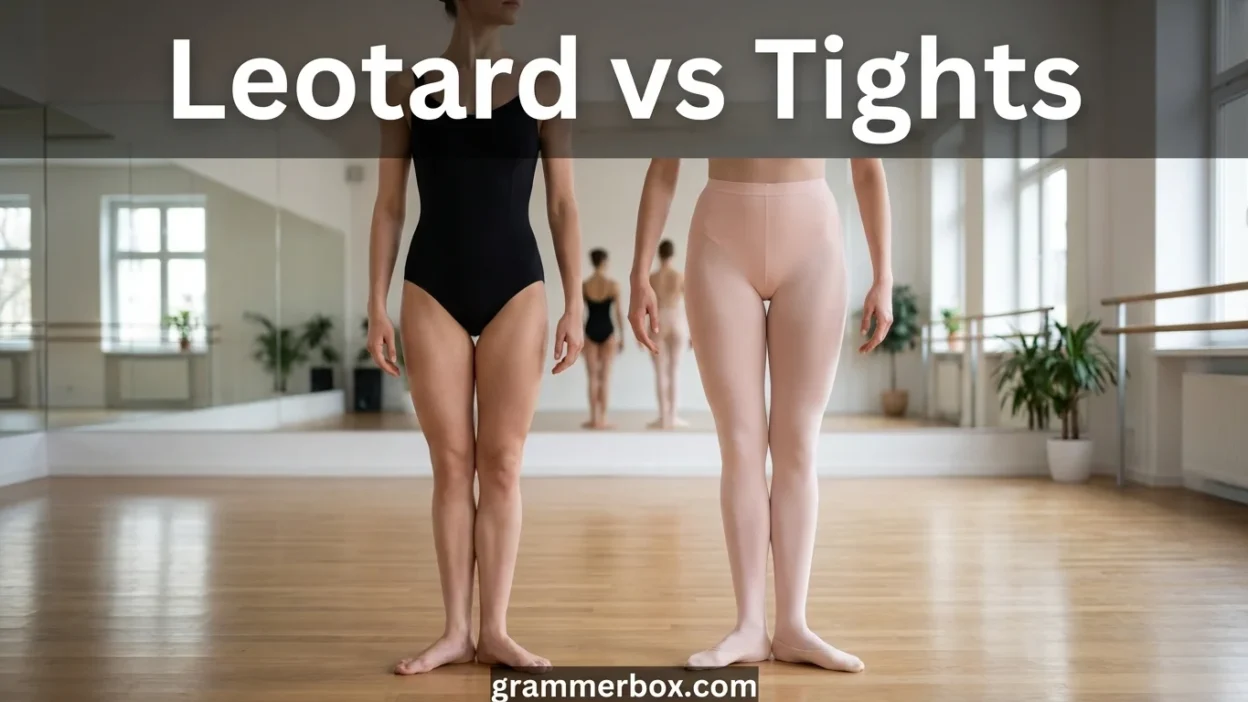
If you are interested in ballet, gymnastics, dance, or performance clothing, you have probably come across the words leotard and tights. They are often mentioned together, which can make it difficult to understand whether they mean the same type of clothing. Although both are common pieces of dancewear, they serve different purposes and cover different parts of the body.
A leotard is a close-fitting one-piece garment that covers the torso and usually leaves the legs exposed. Tights, on the other hand, are close-fitting garments that cover the legs and may extend over the feet or stop at the ankles. Dancers and gymnasts may wear them separately or together, depending on the activity, dress code, and personal preference. Understanding the difference between leotards and tights makes it easier to choose the right outfit for ballet, gymnastics, dance practice, or stage performances.
Quick Answer
A leotard is a one-piece, form-fitting garment that covers the torso and usually leaves the legs uncovered. Tights cover the legs and may cover the feet. In dance and ballet, they are often worn together: the leotard covers the body while tights cover the legs.
Why People Confuse Leotard and Tights
The confusion usually comes from the fact that leotards and tights are commonly worn together.
For example, a ballet dancer might wear a black leotard with pink tights. Because the two garments create one complete dance outfit, people sometimes use the terms incorrectly or assume they describe the same item.
There are several important differences:
- A leotard primarily covers the torso.
- Tights primarily cover the legs.
- A leotard is generally a one-piece garment.
- Tights are generally worn on the lower body.
- Both are designed to fit closely against the body.
- Both are widely associated with ballet, dance, gymnastics, and theater.
What Is a Leotard?
A leotard is a close-fitting one-piece garment that covers the torso and usually extends between the shoulders and hips or upper thighs.
Leotards are especially common in:
- Ballet
- Gymnastics
- Modern dance
- Jazz dance
- Acrobatics
- Theater and stage performances
- Figure skating
A typical leotard may have short sleeves, long sleeves, or no sleeves. It can also have different necklines and back designs.
Examples of “Leotard” in a Sentence
- The dancer wore a black leotard for her ballet class.
- She bought a new leotard for gymnastics.
- The instructor asked everyone to wear a plain leotard.
- Her blue leotard matched her performance costume.
A key point is that a leotard generally does not cover the legs like tights do.
What Are Tights?
Tights are close-fitting garments designed primarily to cover the legs. Depending on the style, they may cover the feet completely, leave the feet exposed, or end around the ankles.
Tights are common in:
- Ballet
- Dance
- Gymnastics
- Theater
- Costumes
- Fashion
- Everyday clothing
Dance tights are often made from stretchy materials such as nylon, polyester, or spandex blends. They allow dancers to move freely while providing coverage and warmth.
Examples of “Tights” in a Sentence
- She wore pink tights to ballet class.
- The dancer pulled on her tights before the performance.
- These tights are comfortable enough for rehearsals.
- The costume includes a leotard and matching tights.
Leotard vs Tights: Comparison Table
| Feature | Leotard | Tights |
|---|---|---|
| Main purpose | Covers the torso | Covers the legs |
| Type | One-piece garment | Leg garment |
| Covers torso | Yes | No |
| Covers legs | Usually no | Yes |
| Covers feet | No | Sometimes |
| Common in ballet | Yes | Yes |
| Common in gymnastics | Yes | Sometimes |
| Usually tight-fitting | Yes | Yes |
| Can be worn together | Yes | Yes |
| Common materials | Nylon, cotton, spandex blends | Nylon, polyester, spandex blends |
When to Use Each
Use “Leotard” When Talking About the One-Piece Garment
Use leotard when you mean the garment worn over the torso.
The gymnast wore a red leotard during the competition.
Here, “leotard” refers specifically to the one-piece garment.
Use “Tights” When Talking About Legwear
Use tights when you mean the close-fitting garment covering the legs.
The ballet dancer wore pink tights.
The word “tights” does not normally mean the same thing as a leotard.
Use Both When Describing a Complete Dance Outfit
You can use both words when a dancer wears the garments together.
She wore a black leotard with matching tights.
This is one of the most common contexts in which the two words appear together.
Leotard vs Tights: 12 Examples
- The dancer wore a purple leotard to class.
- She changed into her ballet tights before rehearsal.
- The gymnast chose a sleeveless leotard.
- Her pink tights were part of the required costume.
- The instructor asked the students to wear a black leotard.
- He bought new tights for the theater production.
- The costume included a blue leotard and white tights.
- She packed two leotards for the weekend competition.
- The dancer checked that her tights were comfortable before performing.
- The gymnastics team received matching leotards.
- She wore her leotard under a warm-up jacket.
- The ballet company requires dancers to wear specific-colored tights.
Common Mistakes
Mistake 1: Treating Them as Synonyms
A leotard and tights are not synonyms.
Incorrect idea: A leotard is another word for tights.
Correct: A leotard covers the torso, while tights cover the legs.
Mistake 2: Calling the Whole Outfit a Leotard
If someone is wearing a leotard with tights, the two garments can be described separately.
She is wearing a leotard and tights.
This is more precise than calling both items a single leotard.
Mistake 3: Assuming Tights Always Cover the Feet
Not all tights have the same design. Some are footed, while others are footless or convertible.
Mistake 4: Confusing Tights With Leggings
Tights are generally thinner and more closely associated with hosiery or dancewear. Leggings are usually thicker and are often worn as everyday clothing or athletic wear.
Memory Trick
Here is an easy way to remember the difference:
Leotard = torso
Tights = legs
Think of the word tights as “tight legwear.”
For a ballet outfit, imagine:
Leotard on top + tights on the legs = complete dancewear outfit
That simple picture can help you remember which word refers to which garment.
American vs British English
The words leotard and tights are used in both American and British English, particularly in contexts involving dance, gymnastics, ballet, and performance clothing.
However, tights can have slightly different everyday associations depending on the variety of English and context.
In British English, tights commonly refers to close-fitting legwear worn as clothing or hosiery. In American English, tights is also widely used for this type of legwear, while pantyhose is another term often used for sheer women’s hosiery.
The word leotard remains broadly consistent in both varieties of English.
Similar Words
Bodysuit
A bodysuit is a one-piece garment that covers the torso and fastens around the crotch. It is commonly associated with fashion and everyday clothing.
Leggings
Leggings are close-fitting leg garments, usually thicker than traditional tights.
Pantyhose
Pantyhose are usually thin, sheer legwear that extends from the feet to the waist. The term is especially common in American English.
Unitard
A unitard is a close-fitting one-piece garment that covers both the torso and the legs. Unlike a traditional leotard, it generally provides full leg coverage.
Bodystocking
A bodystocking is a close-fitting garment that can cover much more of the body, sometimes including the torso and legs.
FAQs:
Is a leotard the same as tights?
No. A leotard covers the torso, while tights cover the legs. They are often worn together in ballet, dance, and gymnastics.
Do dancers wear leotards and tights together?
Yes. Many dancers wear a leotard with tights, although the exact combination depends on the dance style, class requirements, and costume.
Do leotards cover your legs?
Generally, no. A standard leotard covers the torso but leaves most or all of the legs exposed.
Do tights cover your feet?
Some tights cover the feet completely, while others are footless or convertible. The design depends on the type of tights.
Are leggings and tights the same?
Not exactly. Leggings are generally thicker and are commonly worn as everyday or athletic clothing, while tights are often thinner and associated with hosiery, dancewear, and costumes.
What do gymnasts wear, a leotard or tights?
Gymnasts commonly wear leotards. Depending on the activity, performance, or training environment, other garments may also be worn.
Can you wear tights without a leotard?
Yes. Tights can be worn with many different garments, including dresses, skirts, tops, and dance costumes.
Remember This
- Leotard = one-piece garment covering the torso
- Tights = close-fitting legwear
- Leotards and tights are often worn together
- Leggings are similar to tights but are usually thicker
- Unitards cover both the torso and legs
- A leotard is not another word for tights
Conclusion
Understanding the difference between leotard vs tights is simple once you focus on what each garment covers. A leotard is primarily designed for the torso, while tights provide close-fitting coverage for the legs. Both are especially common in ballet, gymnastics, dance, theater, and other performance settings.
If you are learning English vocabulary, shopping for dancewear, or describing a costume, using these terms correctly makes your writing clearer. Remember that the two garments can be worn together, but they are not interchangeable: a leotard covers the body, while tights cover the legs.