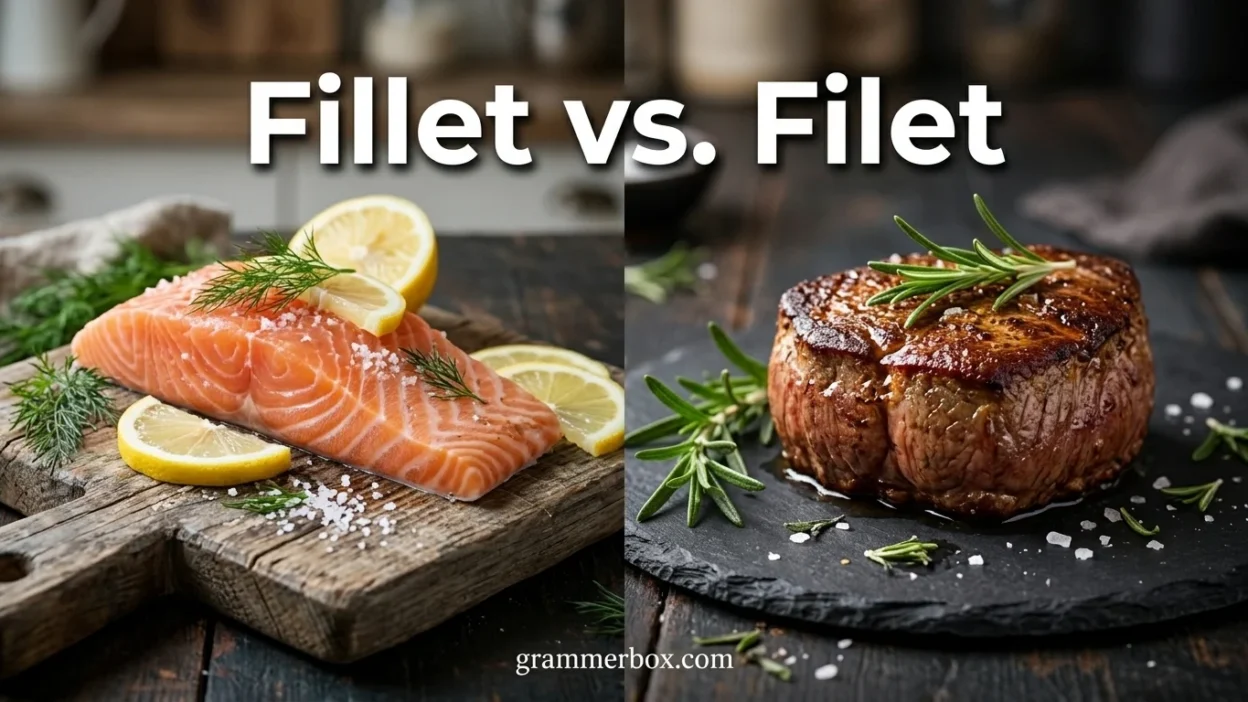
Have you ever wondered if the correct spelling is fillet or filet? Both words appear on restaurant menus, in cookbooks, and in discussions about preparing meat and fish. Although they look slightly different, they share the same origin and have almost identical meanings. This makes it easy to wonder if one spelling is correct and the other is a mistake.
The difference mainly comes down to regional spelling preferences and context. Fillet is the preferred spelling in British English, while filet is commonly used in American English, particularly when referring to food. Both describe a boneless piece or cut of meat or fish. However, there are some interesting differences in how these words appear in everyday writing, cooking instructions, and food terminology. Understanding their usage will help you choose the right spelling and communicate more naturally.
Quick Answer
Fillet is the standard British English spelling, while filet is the common American English spelling. Both refer to a boneless cut of meat or fish. The pronunciation and meaning are generally the same, so your choice depends mainly on your audience and regional writing style.
Why People Confuse It
People often confuse fillet and filet because both words describe essentially the same thing and come from the same French word.
Several reasons explain the confusion:
- Similar meanings: Both refer to a boneless cut of meat or fish.
- Different regional spellings: British English generally prefers fillet, while American English often uses filet.
- French influence: Both spellings are connected to the French word filet.
- Restaurant menus: American restaurants frequently use expressions such as filet mignon, even when other American food contexts use different spelling conventions.
- Similar pronunciation: Both words are commonly pronounced the same way.
The important thing to remember is that neither spelling is inherently incorrect. The appropriate choice depends on your location, audience, and writing context.
First Word: Fillet
Fillet is the preferred spelling in British English and is also used in several other varieties of English.
It refers to a boneless piece or slice of meat or fish. It can also describe the process of removing bones from fish or meat.
Meaning of Fillet
According to its culinary meaning, a fillet is a cut of meat or fish that has had its bones removed.
Examples:
- The chef prepared a fresh salmon fillet for dinner.
- I ordered a chicken fillet sandwich at the restaurant.
- She carefully removed the bones to create a fish fillet.
- We bought two fillets of cod from the market.
- The restaurant serves grilled beef fillet with vegetables.
Fillet as a Verb
The word can also function as a verb. It means to cut meat or fish into boneless pieces.
Examples:
- The chef will fillet the fish before cooking it.
- He learned how to fillet a salmon properly.
- She asked the butcher to fillet the chicken breast.
Where Is Fillet Commonly Used?
You will commonly encounter fillet in:
- British English writing.
- British restaurant menus.
- Fish and seafood recipes.
- Cooking instructions.
- Food packaging and supermarket descriptions.
Remember: If you are writing for a British audience, fillet is generally the safest choice.
Second Word: Filet
Filet is the common American English spelling of the same culinary word.
It refers to a boneless cut of meat or fish. Although Americans frequently use filet, the spelling fillet is also understood and appears in American English.
Meaning of Filet
A filet is a piece of meat or fish that has been separated from the bones.
Examples:
- I ordered a grilled salmon filet for lunch.
- The restaurant is famous for its tender beef filet.
- She prepared a delicious fish filet with lemon butter.
- We enjoyed a chicken filet sandwich after work.
- The chef served the filet with roasted potatoes.
Filet in American Food Terminology
The spelling filet is particularly familiar in American restaurant terminology.
One popular example is filet mignon, a tender cut of beef taken from the smaller end of the tenderloin.
Other expressions include:
- Fish filet
- Beef filet
- Salmon filet
- Chicken filet
- Filet mignon
Where Is Filet Commonly Used?
You will commonly see filet in:
- American English writing.
- American restaurant menus.
- Steakhouse descriptions.
- American cookbooks.
- Food advertisements and product labels.
Remember: If your content targets American readers, filet is a natural spelling for general culinary references.
Fillet vs. Filet: Comparison Table
| Feature | Fillet | Filet |
|---|---|---|
| Preferred variety | British English | American English |
| Meaning | Boneless cut of meat or fish | Boneless cut of meat or fish |
| Origin | French | French |
| Pronunciation | Commonly fill-it | Commonly fill-it |
| Usage | British recipes and menus | American recipes and menus |
| Correctness | Correct | Correct |
| Example | Fish fillet | Fish filet |
The biggest difference is spelling preference, not meaning. Both words are accepted English spellings.
When to Use Each
Choosing between fillet and filet is relatively simple once you understand your target audience.
When to Use Fillet
Use fillet when:
- Writing in British English.
- Publishing content for readers in the UK.
- Preparing British-style recipes.
- Describing fish cuts in British food publications.
- Following British spelling conventions.
Example:
The restaurant serves a delicious grilled salmon fillet with fresh vegetables.
When to Use Filet
Use filet when:
- Writing in American English.
- Creating content for American readers.
- Describing food on American restaurant menus.
- Writing American-style recipes.
- Referring to popular American dishes such as filet mignon.
Example:
The steakhouse offers a perfectly cooked filet mignon with garlic butter.
What If You Are Writing for an International Audience?
If your readers come from different English-speaking countries, either spelling can work.
However, consistency is important. Choose one regional spelling style and use it throughout your article, recipe, or website.
Fillet vs. Filet Examples
Here are 15 practical examples showing how both spellings work in everyday English.
Examples With Fillet
- The chef prepared a fresh salmon fillet for dinner.
- I bought two chicken fillets from the supermarket.
- She prefers grilled fish fillets over fried seafood.
- The recipe requires one large cod fillet.
- He learned how to fillet a fish during his cooking class.
- We ordered beef fillet with mashed potatoes.
- The restaurant serves a delicious tuna fillet.
- She seasoned the fish fillet with garlic and lemon.
Examples With Filet
- I ordered a beef filet at the American steakhouse.
- The restaurant is known for its excellent filet mignon.
- He cooked a salmon filet with fresh herbs.
- The chef served the fish filet with rice.
- She bought a frozen chicken filet for dinner.
- We enjoyed a tender beef filet at the restaurant.
- The menu includes a grilled fish filet with vegetables.
These examples demonstrate that both spellings can communicate the same basic meaning. The regional writing convention determines which one is preferable.
Common Mistakes
Although fillet and filet are both correct, writers sometimes make mistakes when choosing between them.
Here are some common problems to avoid.
1. Thinking One Spelling Is Incorrect
Some people assume that filet is a misspelling of fillet, or vice versa.
Incorrect assumption: Filet is always wrong.
Correct understanding: Both are accepted spellings, with different regional preferences.
2. Mixing Regional Spellings
Using fillet in one paragraph and filet in another can make your writing inconsistent.
Better approach: Follow one English variety throughout your content.
3. Confusing Filet Mignon With a Different Word
Some writers believe filet mignon and fillet have completely unrelated meanings.
In reality, filet mignon is a specific culinary expression referring to a tender cut of beef.
4. Assuming the Words Have Different Pronunciations
Both words are generally pronounced similarly in English.
The spelling difference does not usually indicate a difference in pronunciation.
5. Forgetting the Plural Forms
The standard plural forms are:
- Fillet → Fillets
- Filet → Filets
For example:
- The chef prepared three fish fillets.
- We ordered two beef filets.
Memory Trick: How to Remember Fillet vs. Filet
A simple memory trick can help you remember which spelling to use.
Fillet = British English
Think of the double L in fillet as a reminder of the British spelling.
Filet = American English
Remember that filet has one L, making it the commonly preferred American spelling.
Another easy way to remember:
- Fillet: Common in British recipes.
- Filet: Common in American menus.
If you remember the regional connection, you will rarely confuse these two words again.
American vs. British English
The difference between fillet and filet is a good example of how American and British English use different spelling conventions.
| Context | American English | British English |
|---|---|---|
| General food term | Filet | Fillet |
| Fish cut | Fish filet | Fish fillet |
| Salmon | Salmon filet | Salmon fillet |
| Chicken | Chicken filet | Chicken fillet |
| Beef | Beef filet | Beef fillet |
| Famous steak dish | Filet mignon | Fillet steak / filet mignon |
American English
In the United States, filet is a common spelling for boneless cuts of meat and fish.
For example:
- The menu offers a grilled fish filet.
- I ordered a filet mignon for dinner.
However, American English also recognizes fillet, and it appears in certain culinary contexts.
British English
In the United Kingdom, fillet is the usual spelling for boneless cuts of meat and fish.
For example:
- The chef prepared a fresh fish fillet.
- We ordered a beef fillet with vegetables.
British menus may also use the French expression filet mignon.
Important: These are general spelling preferences, not strict rules that prohibit either form in every situation.
Similar Words
If you are learning the difference between fillet and filet, these related culinary terms may also be useful.
| Word | Meaning |
|---|---|
| Steak | A slice or cut of meat, usually beef |
| Tenderloin | A tender cut of meat from the loin |
| Cutlet | A thin slice of meat |
| Escalope | A thin slice of meat, often prepared for cooking |
| Sirloin | A particular cut of beef |
| Ribeye | A cut of beef from the rib section |
| Boneless | Meat or fish without bones |
| Mignon | A French word meaning small or delicate |
These terms describe different cuts, qualities, or preparations of food. They are related to the same culinary vocabulary but are not interchangeable with fillet or filet.
FAQs:
1. Is fillet or filet correct?
Both spellings are correct. Fillet is preferred in British English, while filet is commonly preferred in American English. Both describe a boneless cut of meat or fish.
2. Is filet American or British?
Filet is primarily associated with American English when used as a general culinary term. British English generally prefers fillet, although the French expression filet mignon is also used.
3. How do you pronounce fillet and filet?
Both words are commonly pronounced fill-it in English. Their spelling differs, but their pronunciation is generally the same.
4. Is filet mignon spelled with one L or two?
The traditional expression is filet mignon, with one L in filet. It is a French culinary term commonly used in American restaurants.
5. Is fish fillet or fish filet correct?
Both are correct. Fish fillet is more common in British English, while fish filet is commonly used in American English.
6. What is the plural of fillet and filet?
The plural of fillet is fillets, while the plural of filet is filets. Both forms follow standard English pluralization.
7. Does fillet mean boneless meat?
Yes. In culinary contexts, a fillet generally refers to a boneless piece of meat or fish. The word can also describe the process of removing bones and preparing such a cut.
Final Verdict
The difference between fillet vs. filet is mainly regional spelling. Both words describe a boneless piece of meat or fish, and neither is universally incorrect. If you follow British English conventions, choose fillet. If you write for an American audience, filet is generally the preferred spelling for the same culinary meaning.
The most important thing is to understand your audience and remain consistent. If you are writing a restaurant menu, preparing a cooking guide, or publishing an English grammar article, choosing the appropriate regional spelling will make your writing clearer and more professional.
Remember This
- Fillet: Preferred British English spelling.
- Filet: Common American English spelling.
- Meaning: Both describe a boneless cut of meat or fish.
- Pronunciation: Generally the same.
- Best tip: Use the spelling that matches your target audience.