Have you ever heard someone described as being “three sheets to the wind” and wondered what it actually means? This colorful English idiom has nothing to do with literal sheets blowing in the wind. Instead, it is a humorous way to describe someone who is very drunk or heavily intoxicated, usually to the point that they are unsteady, confused, or behaving unusually.
The expression has a long nautical history and is often associated with old-fashioned sailor language. Today, you may encounter three sheets to the wind in books, movies, casual conversations, and humorous writing. Understanding its meaning, tone, and proper usage can help you recognize it immediately when reading or hearing English. In this guide, we’ll explain the idiom clearly, explore its possible origin, compare it with similar expressions, and provide practical examples you can use as a learner.
Quick Answer
“Three sheets to the wind” means extremely drunk or intoxicated. It is an informal, humorous idiom that describes someone whose drinking has left them unsteady or unable to behave normally. It is usually used casually rather than in formal writing.
Why People Confuse It
The phrase can be confusing because its literal words do not reveal its actual meaning.
- Three sheets sounds like three pieces of paper or fabric.
- To the wind suggests something being blown away.
- Together, however, the phrase is an idiomatic expression meaning very drunk.
- It is generally humorous or colorful rather than a neutral description.
- The expression is especially associated with nautical terminology.
For English learners, this is a good example of why idioms should not always be translated word-for-word.
First Word: “Three”
The word “three” refers to the number three.
In the idiom, it helps create the traditional expression “three sheets to the wind.” You normally should not replace it with another number when using the established idiom.
For example:
- Correct: He was three sheets to the wind.
- Incorrect: He was four sheets to the wind.
The fixed wording is part of what makes an idiom recognizable.
Second Word: “Sheets”
A sheet can mean a large, flat piece of material, such as a bedsheet or sheet of paper.
In the nautical explanation of this expression, however, sheets refers to ropes used to control sails. If a ship’s sheets became loose, the sails could flap or move uncontrollably, making the vessel difficult to manage.
This nautical imagery helps explain why the phrase came to represent someone who was physically unsteady or out of control.
Comparison Table
| Expression | Meaning | Tone | Example |
|---|---|---|---|
| Three sheets to the wind | Very drunk | Humorous, informal | He was three sheets to the wind at the party. |
| Drunk | Having consumed too much alcohol | Neutral/informal | He was drunk after dinner. |
| Wasted | Extremely drunk or intoxicated | Very informal | They got wasted last night. |
| Tipsy | Slightly drunk | Light/informal | She was a little tipsy. |
| Plastered | Very drunk | Informal/slang | He came home plastered. |
| Sober | Not affected by alcohol | Neutral | She was completely sober. |
When to Use Each
Use “three sheets to the wind”
Use it when you want a colorful or humorous way to say someone is extremely drunk.
Tom was three sheets to the wind by midnight.
Use “drunk”
Choose drunk when you want a straightforward and widely understood description.
Tom was drunk by midnight.
Use “tipsy”
Use tipsy when someone is only mildly affected by alcohol.
She was feeling a little tipsy.
Use “wasted” or “plastered”
These are more informal and slang-like. They can work in casual conversations but are less suitable for professional or formal contexts.
Examples of “Three Sheets to the Wind”
Here are more than ten natural examples:
- Jake was three sheets to the wind after the office party.
- By the end of the celebration, Mark was three sheets to the wind.
- He stumbled through the door, three sheets to the wind.
- The sailor was three sheets to the wind after drinking all night.
- She was three sheets to the wind but still trying to dance.
- My uncle gets three sheets to the wind whenever he visits the pub.
- They found him three sheets to the wind outside the restaurant.
- He became three sheets to the wind after a few too many drinks.
- The character in the movie was three sheets to the wind when he made the announcement.
- Nobody trusted his judgment because he was three sheets to the wind.
- By midnight, several guests were three sheets to the wind.
- He was so three sheets to the wind that he could barely walk straight.
Example in dialogue
Sarah: Where’s Daniel?
Mike: He’s three sheets to the wind at the bar.
Sarah: Then someone should probably get him a ride home.
Here, the phrase humorously communicates that Daniel is very drunk.
Common Mistakes
1. Taking it literally
Incorrect understanding: Someone has three physical sheets blowing in the wind.
Correct: The expression describes someone who is very drunk.
2. Using it in formal situations
Because the phrase is informal and humorous, it may sound inappropriate in serious professional writing.
Instead of:
The employee was three sheets to the wind.
A formal report might say:
The employee appeared to be intoxicated.
3. Changing the phrase
The established idiom is “three sheets to the wind.” Avoid changing the number or structure.
4. Confusing it with “tipsy”
Someone who is tipsy is mildly drunk. Someone who is three sheets to the wind is generally understood to be very drunk.
5. Assuming it describes personality
The phrase describes a person’s temporary condition, not their permanent character.
Memory Trick
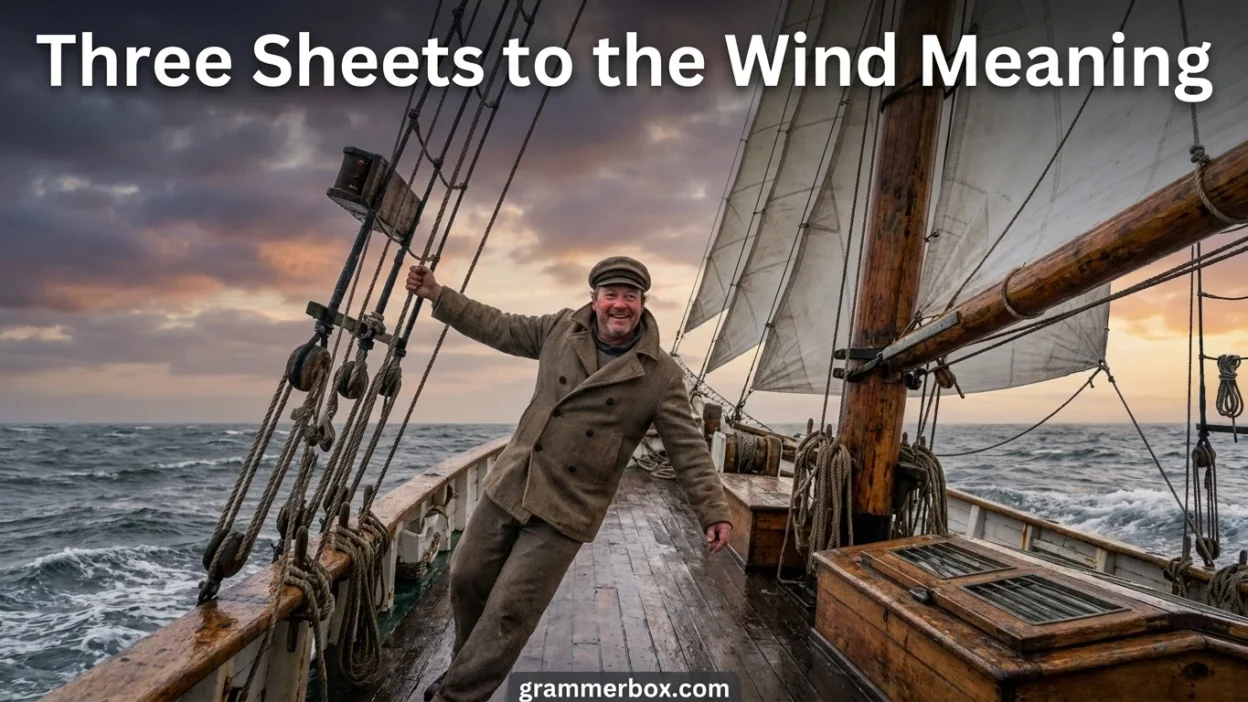
Think of a sailboat with loose sheets.
If the ropes controlling the sails become loose, the sails can flap wildly, making the boat difficult to control.
Now imagine a person who has had far too much alcohol: unsteady, uncontrolled, and all over the place.
Three sheets → loose sails → difficult to control → very drunk.
That mental picture makes the idiom much easier to remember.
American vs. British English
“Three sheets to the wind” is understood in both American and British English.
However, it is an informal idiom and may sound somewhat old-fashioned or playful compared with everyday words such as drunk, tipsy, or wasted.
You can therefore recognize the expression in American or British books, films, and conversations without assuming that it is exclusive to one variety of English.
Similar Words and Expressions
Several expressions have a similar meaning:
- Drunk — affected by alcohol.
- Very drunk — a direct description of heavy intoxication.
- Tipsy — slightly drunk.
- Wasted — extremely drunk; very informal.
- Plastered — very drunk; informal.
- Blasted — informal expression for being very drunk.
- Hammered — extremely drunk; slang.
- Loaded — drunk or heavily affected by alcohol; informal.
- Under the influence — affected by alcohol or another substance; more formal.
- Smashed — very drunk; common in informal British English.
The closest everyday equivalent to “three sheets to the wind” is simply “very drunk.”
Final Verdict
“Three sheets to the wind” means extremely drunk or intoxicated. It is an informal, humorous idiom with strong nautical imagery and is not normally meant literally.
If you encounter this phrase in a novel, movie, article, or conversation, think “very drunk” rather than trying to interpret the individual words separately. Use it when a colorful, conversational expression fits the situation, but choose “intoxicated” or another neutral term for formal contexts.
FAQs:
What does “three sheets to the wind” mean?
It means that someone is very drunk or heavily intoxicated. The expression is informal and often humorous.
Is “three sheets to the wind” a metaphor?
Yes. It uses nautical imagery to describe a person who is unsteady or difficult to control because they have consumed too much alcohol.
Where did “three sheets to the wind” come from?
The phrase is associated with nautical language. Sheets were ropes used to control sails, and loose sheets could cause sails to flap and behave unpredictably. The exact historical development of the idiom is debated.
Is “three sheets to the wind” formal?
No. It is generally informal and humorous. In formal writing, words such as intoxicated or under the influence are usually more appropriate.
Can you say “three sheets to the wind” about someone who is slightly drunk?
Usually, no. The expression suggests that someone is very drunk, rather than merely a little tipsy.
Is “three sheets to the wind” still used today?
Yes. Although it can sound somewhat old-fashioned or colorful, modern speakers still use it, especially in humorous conversation and writing.
What is another way to say “three sheets to the wind”?
You can say very drunk, wasted, plastered, hammered, smashed, or simply intoxicated, depending on the level of formality.
Conclusion
The idiom “three sheets to the wind” is a memorable example of how English expressions can have meanings that differ dramatically from their literal wording. Rather than describing sheets being blown around, it refers to someone who is extremely drunk. Its nautical imagery gives the phrase its distinctive character and makes it more colorful than simply saying “drunk.”
For everyday English, remember that this expression is informal, humorous, and usually suggests significant intoxication. If you understand the basic meaning and recognize its nautical imagery, you’ll be able to spot three sheets to the wind easily in conversations, literature, movies, and other English-language content.
Remember This
Three sheets to the wind = very drunk or heavily intoxicated.
Think: loose sails → difficult to control → unsteady person → very drunk.