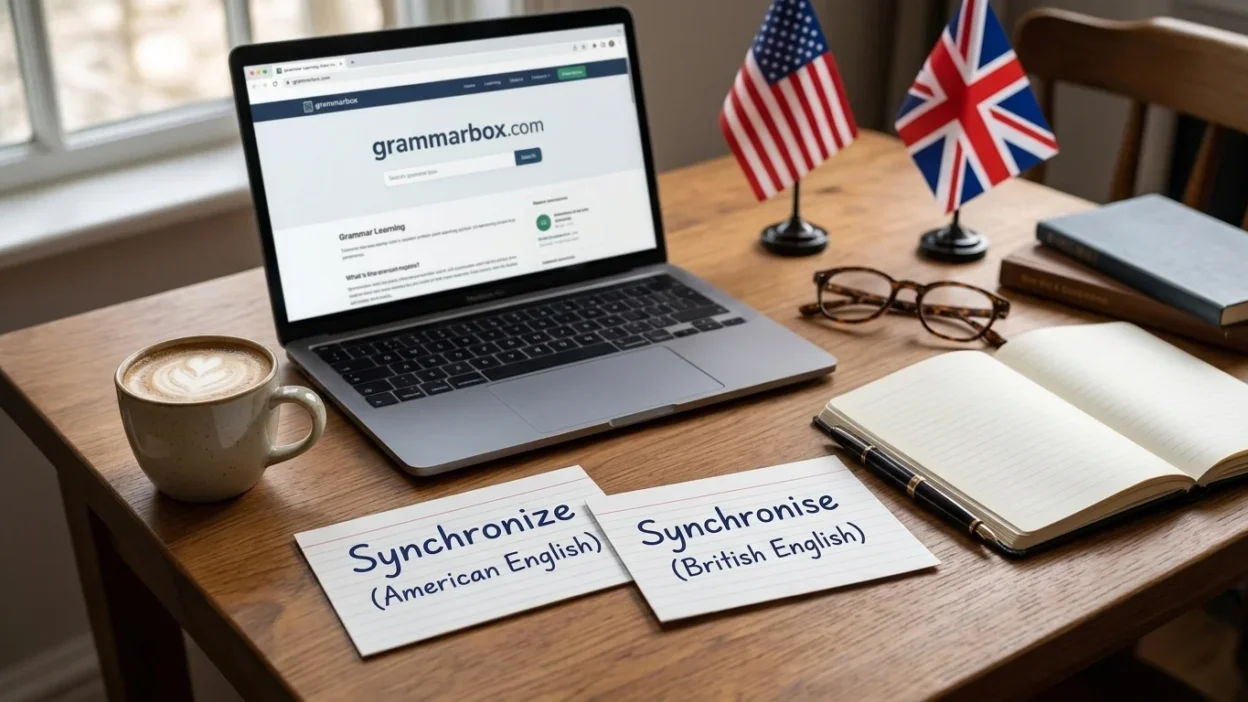
Have you ever wondered if to write synchronize or synchronise? Both spellings are correct, but the one you should use depends on the variety of English you are writing. This small spelling difference often confuses students, English learners, bloggers, and professional writers who want their content to follow standard English rules. Fortunately, understanding the difference is simple once you know which countries prefer each form.
The words synchronize and synchronise have the same meaning: to make things happen at the same time or operate together in coordination. You might synchronize your phone with your computer, synchronise your calendar with your work schedule, or ensure that two devices share the same information. The only difference between these words is the letter z in American English and s in British English. In this guide, you will learn when to use each spelling, explore practical examples, understand regional preferences, and discover easy ways to remember the correct form. By the end, you will be able to choose the appropriate spelling confidently in everyday writing and professional communication.
Quick Answer: Synchronize vs Synchronise
Synchronize is the preferred spelling in American English, while synchronise is commonly used in British English. Both words mean to make events, movements, devices, or activities happen together or operate at the same time. Neither spelling is inherently incorrect; choose the form that matches your audience and remain consistent throughout your writing.
Why People Confuse Synchronize and Synchronise
People often confuse these words because they have identical meanings, pronunciation, and grammatical functions. Both are verbs, and both describe coordinating events, movements, schedules, or systems.
The confusion mainly comes from differences between American and British spelling conventions. American English generally prefers -ize, while British English often uses -ise in words such as organize/organise and realize/realise.
Here are the main reasons these spellings cause confusion:
- Different regional conventions: American and British English follow different spelling preferences.
- Identical meanings: Neither spelling changes the definition of the word.
- Similar pronunciation: The words are pronounced the same way in standard English.
- International communication: Writers may encounter both forms in books, websites, software, and educational materials.
- Uncertainty about correctness: Some people mistakenly believe that one spelling is always wrong.
The easiest solution is to identify your target audience before writing. If you are writing for American readers, use synchronize. If your audience follows British English conventions, synchronise is a common choice.
First Word: Synchronize
Synchronize is the standard spelling in American English. It means to coordinate two or more things so that they happen together, operate at the same time, or maintain matching information.
This spelling is widely used in American education, technology, business communication, and everyday writing.
Meaning of Synchronize
The verb synchronize can describe several situations:
- Coordinating events: Making two activities happen at the same time.
- Matching movements: Ensuring that movements occur together.
- Updating information: Making data consistent across different devices or systems.
- Coordinating schedules: Arranging activities to fit together.
- Matching timing: Adjusting processes so that they operate in coordination.
Examples of Synchronize
- I need to synchronize my phone with my laptop.
- The dancers practiced to synchronize their movements.
- Please synchronize your calendar with the team schedule.
- The software allows users to synchronize files across multiple devices.
- The director worked hard to synchronize the audio and video.
Word Forms of Synchronize
Understanding related word forms can help you use the word correctly.
| Word Form | Example |
|---|---|
| Synchronize | We synchronize our schedules every Monday. |
| Synchronizes | This application synchronizes your files automatically. |
| Synchronized | The two clocks are synchronized. |
| Synchronizing | She is synchronizing the audio tracks. |
| Synchronization | Synchronization keeps the devices working together. |
When to use it: Choose synchronize when writing in American English or when following a style guide that prefers American spelling.
Second Word: Synchronise
Synchronise is a common British English spelling of the same verb. It means to coordinate events, movements, schedules, or systems so they work together or occur at the same time.
The spelling is widely used in British English and is also found in other English varieties influenced by British spelling conventions.
Meaning of Synchronise
The meaning of synchronise is exactly the same as the meaning of synchronize. The difference is purely orthographic, meaning it concerns how the word is written rather than what it means.
For example, a British writer might use synchronise when describing the coordination of computer files, musical performances, or work schedules.
Examples of Synchronise
- I need to synchronise my phone with my laptop.
- The dancers practiced to synchronise their movements.
- Please synchronise your calendar with the team schedule.
- The software allows users to synchronise files across multiple devices.
- The director worked hard to synchronise the audio and video.
Word Forms of Synchronise
The related forms follow the same British spelling pattern.
| Word Form | Example |
|---|---|
| Synchronise | We synchronise our schedules every Monday. |
| Synchronises | This application synchronises your files automatically. |
| Synchronised | The two clocks are synchronised. |
| Synchronising | She is synchronising the audio tracks. |
| Synchronisation | Synchronisation keeps the devices working together. |
When to use it: Choose synchronise when writing in British English or following a British English style guide that prefers the -ise spelling.
Synchronize vs Synchronise: Comparison Table
The following table highlights the key similarities and differences between these spellings.
| Feature | Synchronize | Synchronise |
|---|---|---|
| Preferred variety | American English | British English |
| Meaning | To coordinate or make simultaneous | To coordinate or make simultaneous |
| Pronunciation | The same | The same |
| Part of speech | Verb | Verb |
| Spelling difference | Uses z | Uses s |
| Past tense | Synchronized | Synchronised |
| Present participle | Synchronizing | Synchronising |
| Noun form | Synchronization | Synchronisation |
| Typical context | American publications and writing | British publications and writing |
| Correctness | Correct | Correct |
Key takeaway: The difference between synchronize and synchronise is regional spelling preference, not meaning or grammar.
When to Use Each
Choosing the correct spelling becomes easier when you consider your audience, publication requirements, and preferred English variety.
Use Synchronize in American English
Choose synchronize when writing for an American audience or using American English spelling conventions.
Common situations include:
- Writing American English blog posts and articles.
- Preparing school assignments that require American spelling.
- Creating documentation for an American company.
- Publishing content for an American audience.
- Following a style guide that prefers American spellings.
Examples:
- The application can synchronize contacts across your devices.
- We need to synchronize the meeting times before sending invitations.
- The production team will synchronize the subtitles with the video.
Use Synchronise in British English
Choose synchronise when writing for a British audience or following a British English style guide that uses the -ise form.
Common situations include:
- Writing articles for British readers.
- Preparing documents for a British organization.
- Following British English spelling conventions.
- Creating educational materials that use British spelling.
- Publishing content for an audience accustomed to British English.
Examples:
- The application can synchronise contacts across your devices.
- We need to synchronise the meeting times before sending invitations.
- The production team will synchronise the subtitles with the video.
What If Your Audience Is International?
If your readers come from different countries, either spelling can work. The most important thing is to select a spelling convention and apply it consistently.
For example, if your website generally uses American English, write synchronize, organize, and realize. If it follows British English conventions, you may prefer synchronise, organise, and realise.
Keep in mind that British English does not always require -ise. Some British dictionaries and style guides accept or prefer -ize in many words. Therefore, follow your chosen style guide when a specific standard applies.
Examples of Synchronize vs Synchronise in Sentences
These examples demonstrate how both spellings work in everyday communication, technology, education, and professional writing.
1. Technology
- American: You should synchronize your phone with your computer.
- British: You should synchronise your phone with your computer.
Both sentences describe connecting devices so that their information matches or updates together.
2. Work Schedules
- American: We must synchronize our schedules before the conference.
- British: We must synchronise our schedules before the conference.
Both sentences describe coordinating schedules.
3. Music
- American: The musicians worked together to synchronize their performances.
- British: The musicians worked together to synchronise their performances.
Both sentences refer to coordinating musical timing.
4. Video Editing
- American: Please synchronize the sound with the video.
- British: Please synchronise the sound with the video.
Both sentences describe matching audio and video timing.
5. Business Communication
- American: The departments need to synchronize their plans.
- British: The departments need to synchronise their plans.
Both sentences describe coordinating plans between departments.
6. Data Management
- American: The program will synchronize your files automatically.
- British: The program will synchronise your files automatically.
Both sentences refer to keeping files updated across systems.
7. Teamwork
- American: Our team must synchronize its efforts to meet the deadline.
- British: Our team must synchronise its efforts to meet the deadline.
Both sentences emphasize coordinating work.
8. Education
- American: Students can synchronize their study plans with the examination schedule.
- British: Students can synchronise their study plans with the examination schedule.
Both sentences describe aligning study activities with exam dates.
9. Clocks
- American: The technician will synchronize the clocks in the building.
- British: The technician will synchronise the clocks in the building.
Both sentences refer to setting clocks to the same time.
10. Mobile Applications
- American: You can synchronize your contacts through the application.
- British: You can synchronise your contacts through the application.
Both sentences describe updating or matching contact information.
11. Scientific Experiments
- American: Researchers must synchronize the instruments before collecting data.
- British: Researchers must synchronise the instruments before collecting data.
Both sentences describe coordinating the timing of scientific instruments.
12. Daily Activities
- American: My brother and I try to synchronize our morning routines.
- British: My brother and I try to synchronise our morning routines.
Both sentences mean that the speakers try to coordinate their daily activities.
Common Mistakes
Although synchronize and synchronise have the same meaning, writers sometimes make mistakes when choosing between them.
Mistake 1: Thinking One Spelling Is Always Wrong
Incorrect assumption: Synchronise is always a misspelling.
Correction: Both forms are accepted, but their regional preferences differ. Synchronize is standard in American English, while synchronise is common in British English.
Mistake 2: Mixing American and British Spellings
A writer might use synchronize in one paragraph and synchronise in the next without a specific reason.
Better approach: Choose one spelling convention and maintain it throughout the document.
Consistency makes articles, reports, and website content look more professional.
Mistake 3: Changing the Meaning of the Word
Some learners assume that the spelling difference changes the meaning.
That is not the case. Both words mean to coordinate events, movements, or systems.
Mistake 4: Confusing the Verb and Noun
Synchronize and synchronise are verbs. The corresponding nouns are synchronization and synchronisation.
- Verb: We need to synchronize the devices.
- Noun: The synchronization of the devices is complete.
Mistake 5: Ignoring a Required Style Guide
A school, company, publisher, or website may require a particular spelling convention.
Better approach: Follow the relevant style guide rather than switching spellings based on personal preference.
Memory Trick: How to Remember Synchronize vs Synchronise
A simple memory trick can help you choose the right spelling without hesitation.
Remember: Z for American, S for British.
- Synchronize: Think of the Z in American-style spelling.
- Synchronise: Remember the S used in many British English spellings.
You can reinforce this trick by learning related words:
| American English | British English |
|---|---|
| Synchronize | Synchronise |
| Organize | Organise |
| Realize | Realise |
| Recognize | Recognise |
| Apologize | Apologise |
These pairs illustrate a common spelling pattern, although individual words may follow different conventions depending on the dictionary or style guide.
Easy reminder: If your writing uses American English, choose synchronize. If it follows a British style that prefers -ise, choose synchronise.
American vs British English
American and British English share most of their vocabulary and grammar, but they differ in certain spelling conventions. The -ize and -ise endings are a familiar example.
American English
American English generally uses synchronize.
Examples include:
- We need to synchronize the database.
- The application synchronizes your information.
- The devices were synchronized successfully.
American English commonly uses related forms such as synchronizing and synchronization.
British English
British English commonly uses synchronise.
Examples include:
- We need to synchronise the database.
- The application synchronises your information.
- The devices were synchronised successfully.
Related forms commonly include synchronising and synchronisation.
Do All British Writers Use Synchronise?
No. Although synchronise is common in British English, some British dictionaries and publishers also accept or prefer synchronize. The choice can depend on the publication’s style guide.
For example, the Oxford style tradition uses -ize in many words, while other British publications prefer -ise.
Therefore, it is more accurate to describe synchronise as a common British spelling rather than the only correct British spelling.
Which Spelling Should English Learners Choose?
English learners should choose the form that matches their learning materials, audience, or writing requirements.
If you are studying American English, use synchronize. If you are studying British English and your course follows the -ise convention, use synchronise.
Neither spelling is universally superior. Consistency and audience expectations matter most.
Similar Words to Synchronize and Synchronise
Several English words have related meanings or follow the same spelling pattern. Learning them can expand your vocabulary and improve your understanding of regional spelling differences.
1. Coordinate
Meaning: To organize activities or people so they work together effectively.
Example: The manager will coordinate the project teams.
Unlike synchronize, coordinate does not always imply that activities happen at precisely the same time.
2. Align
Meaning: To arrange things so they match, agree, or work toward the same goal.
Example: We need to align our goals before starting the project.
3. Match
Meaning: To make two or more things correspond or be alike.
Example: Please match the audio with the correct video clip.
4. Harmonize / Harmonise
Meaning: To make things consistent, compatible, or harmonious.
Example: The company wants to harmonize its internal policies.
Both spellings are used, with preferences depending on the variety of English and the style guide.
5. Organize / Organise
Meaning: To arrange or manage things systematically.
Example: We need to organize the files before the presentation.
American English generally prefers organize, while many British publications prefer organise.
6. Standardize / Standardise
Meaning: To make something follow a consistent standard.
Example: The organization plans to standardize its procedures.
Both spellings are used, depending on regional conventions and style preferences.
7. Synchronization / Synchronisation
Meaning: The process of coordinating events, movements, or systems so that they operate together.
Example: Synchronization is essential when editing audio and video.
The noun follows the same regional spelling distinction as the verb.
FAQs:
1. Is synchronize or synchronise correct?
Both spellings are correct. Synchronize is preferred in American English, while synchronise is common in British English. Your choice should depend on your audience and the style guide you follow.
2. What does synchronize mean?
To synchronize means to coordinate two or more things so that they happen together, operate at the same time, or maintain matching information. For example, you can synchronize your phone with your computer.
3. Is synchronise British English?
Yes, synchronise is a common British English spelling. However, some British dictionaries and publications also accept or prefer synchronize, so the preferred form depends on the style guide.
4. Is synchronize American English?
Yes, synchronize is the standard spelling in American English. It is commonly used in technology, business, education, and everyday communication.
5. Are synchronize and synchronise pronounced the same?
Yes. In standard English pronunciation, both spellings are pronounced the same way. The difference is in their written forms, not their pronunciation or meaning.
6. What is the past tense of synchronize and synchronise?
The American English past tense is synchronized, while the British -ise form is synchronised. Both mean that something was coordinated or made to operate at the same time.
7. Should I use synchronize or synchronise on my website?
Choose the spelling that matches your website’s overall English style. Use synchronize if your content follows American English conventions. Use synchronise if your content follows a British style guide that prefers -ise. Consistency is more important than choosing one form as universally correct.
Conclusion
Understanding synchronize vs synchronise is easy once you recognize the difference between American and British spelling conventions. Both words mean to coordinate activities, movements, schedules, or systems so they work together or happen at the same time. The main distinction is that American English generally prefers synchronize, whereas British English commonly uses synchronise. Their pronunciation, grammatical function, and meaning remain the same.
For better English writing, identify your target audience and follow a consistent spelling style. This approach is especially useful when creating educational articles, professional documents, business communications, and website content. If you remember that American English generally favors Z and many British publications favor S in this word, you can make the right choice confidently.
Remember This
- Synchronize: Preferred in American English.
- Synchronise: Common in British English.
- Meaning: Both mean to coordinate things so they work or happen together.
- Best practice: Follow your audience’s spelling conventions and remain consistent.